
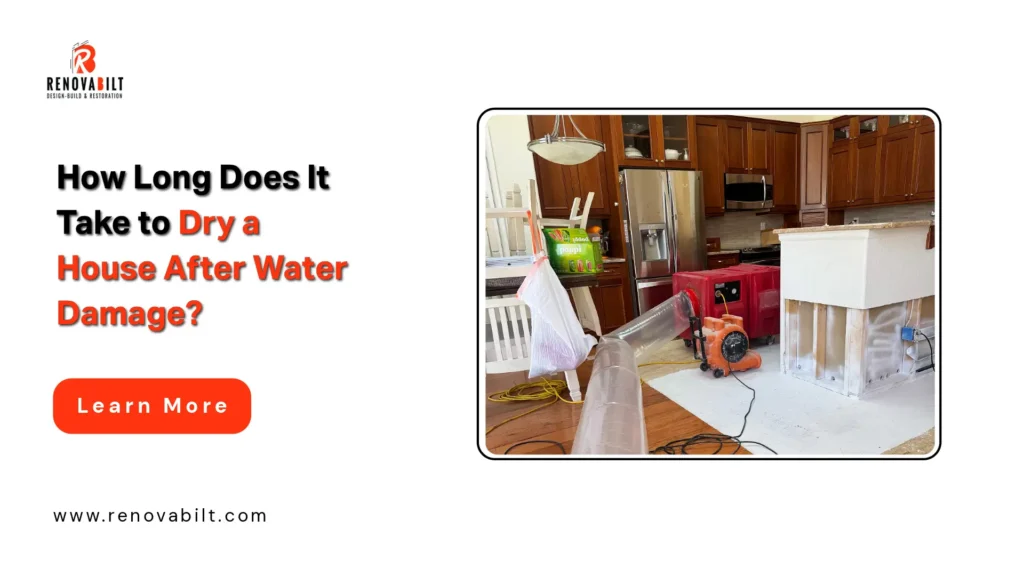
Finding water damage in your house is one thing. The real problem is the uncertainty that follows once the leak has been sorted and the standing water has been removed. You may still have damp walls, swollen baseboards, wet floorboards, and moisture in places you can’t see. The question you’re going to be asking yourself is: how long will it actually take before my house is dry and safe?
In Denver and throughout Colorado, water damage can occur as a result of burst pipes in the winter (due to freezing), plumbing leaks, basement flooding, or a roof leaking after a significant amount of snow or rain. Some minor leaks will dry out in a few days, but water that’s behind the walls, under the floor, or in a concrete slab can take a long time to get out.
Most residential water damage drying takes about 3–5 days, although the actual timescale will vary enormously depending on the materials involved, the extent of the spread, and the moisture levels in the house. Simply getting rid of the standing water and running a few fans is unlikely to be sufficient.
This guide looks at how long various parts of a house take to dry, what influences the drying time, and how a professional water damage drying service can go beyond the surface to identify and remove any hidden moisture that may be present before it causes further damage.
Key Takeaways
- Most residential water damage drying takes approximately 3–5 days, but extensive damage can take several weeks.
- Drying time depends on the amount of water, affected materials, indoor humidity, temperature, and how quickly cleanup begins.
- Water trapped behind walls, beneath flooring, and inside insulation can remain long after visible surfaces appear dry.
- Drywall, hardwood, subfloors, and concrete slabs each have different moisture retention and drying characteristics.
- Water extraction removes standing water, while structural drying removes moisture absorbed by building materials.
- Professional air movers and dehumidifiers help control evaporation and remove excess moisture from indoor air.
- Moisture meters and regular monitoring help determine whether affected materials have reached appropriate drying targets.
- Delayed or incomplete drying can contribute to mold growth, damaged flooring, weakened building materials, and persistent musty odors.
- A home should be considered dry based on verified moisture readings, not simply its appearance or the number of days drying equipment has been running.
How Many Days Does It Take to Dry a House After Water Damage?
For many residential water damage situations, professional structural drying takes approximately 3 to 5 days. However, this is a general estimate, not a guaranteed completion time.
The actual timeline depends on the water source, affected materials, moisture levels, indoor conditions, and the effectiveness of the drying process.
Here is a general breakdown:
| Type of water damage | General drying estimate |
| Small, localized plumbing leak | 2–3 days |
| Water damage affecting carpet and padding | 3–5 days |
| Wet drywall and wall cavities | 3–7 days or longer |
| Water damage affecting wood flooring and subfloors | 5–10 days or longer |
| Basement flooding | 3–7 days or longer |
| Water intrusion affecting concrete slabs | Several days to multiple weeks |
| Extensive flooding affecting multiple rooms | 1–2 weeks or longer |
These timeframes are approximate. They describe possible drying periods, not fixed deadlines.
A property with a small amount of water spread across several porous materials may take longer to dry than a larger area with water confined to nonporous surfaces.
Professional moisture measurements, rather than visual appearance or a predetermined number of days, should determine when drying is complete.
What Factors Affect How Long a House Takes to Dry?
Two homes can experience similar water leaks and still have very different drying times. The following factors help explain why.
1. How Much Water Entered the Property
The amount of water is one of the first things restoration professionals consider.
A leaking supply line that releases a small amount of water over a short period may affect only a limited section of flooring or drywall. A burst pipe can release much more water in a short time, allowing moisture to spread through multiple rooms and building materials.
The longer water remains inside the property, the greater the possibility that it will penetrate deeper into porous materials.
2. Which Building Materials Became Wet
Different materials absorb, retain, and release moisture at different rates.
- Drywall: The paper facing and gypsum core can absorb water. Moisture may also travel into the wall cavity.
- Wood framing: Wooden studs and structural components absorb moisture and may require extended drying.
- Carpet and padding: Carpet fibers may release moisture relatively quickly, but thick padding underneath can retain water.
- Hardwood flooring: Wood can absorb moisture, swell, cup, or buckle. Drying must account for moisture within the boards and the subfloor.
- Concrete: Concrete is porous and can absorb water. Moisture may remain within the slab even after the surface feels dry.
- Insulation: Wet fiberglass or other insulation materials can retain moisture inside wall and ceiling cavities.
The combination of materials affected often matters more than the visible size of the damaged area.
3. How Long the Water Remained Before Cleanup
The time between the initial leak and the start of water removal can significantly affect the drying process.
For example, a water leak inside the house that is discovered immediately may cause limited damage. The same leak left undetected for several days can spread into wall cavities, flooring systems, and insulation.
Delayed discovery also makes it harder to determine the original path of the water because moisture may have migrated away from the visible leak.
4. Indoor Temperature and Humidity
Temperature and humidity affect how quickly water evaporates from building materials.
Warm air can hold more water vapor than cold air. However, simply heating a room does not remove moisture from the property.
As water evaporates from wet materials, it enters the surrounding air. If that humid air is not dehumidified or properly exhausted under suitable conditions, drying can slow down.
This is why professional drying involves managing both airflow and indoor humidity.
5. The Extent of Hidden Water Damage
Visible water is only part of the problem.
A water leak inside a wall can spread along framing members, collect near the bottom plate, and soak insulation. Water can also travel beneath flooring, behind baseboards, and into adjoining rooms.
These concealed areas may need targeted drying methods or removal of materials that cannot be dried effectively.
A property cannot be considered dry simply because the carpet, floor, or wall surface feels normal.
How Long Does It Take to Dry Different Parts of a House?
The location of water damage has a direct effect on the drying process. Some materials release moisture relatively quickly, while others can retain it for much longer.
Drying Walls After a Water Leak
A water leak inside a wall can be difficult to assess because the damaged area is often hidden behind drywall.
Water from a leaking pipe may travel down the inside of a wall and collect near the floor. It can also soak insulation, wooden framing, and the back of the drywall.
Depending on the amount of water and the materials affected, wall drying may take several days or longer.
Professionals may use moisture meters and other inspection tools to identify wet areas. Where appropriate, targeted openings may be needed to provide access to trapped moisture.
If drywall or insulation has deteriorated or cannot be dried adequately, removal and replacement may be necessary.
Drying Baseboards After Water Damage
Baseboard water damage is a common sign of moisture spreading along the bottom of a wall.
Baseboards may swell, separate from the wall, discolor, or develop soft spots. However, visible damage to the trim does not reveal how much moisture has reached the drywall or wall cavity behind it.
In some situations, the baseboard can be removed to inspect the lower wall and check moisture conditions.
The drying time depends on whether the water affected only the trim or also reached the drywall, framing, and flooring.
Replacing the baseboard before addressing the moisture behind it can leave the underlying problem unresolved.
Drying Hardwood Floors and Subfloors
Wood flooring can absorb water through its surface, edges, and joints. Depending on the construction, moisture may also reach the subfloor.
Homeowners may notice:
- Floorboards curling upward at the edges.
- Raised or uneven flooring.
- Gaps between boards.
- Discoloration or dark patches.
- Soft or spongy areas.
Drying hardwood floors requires careful monitoring because drying too quickly or unevenly can create additional stress in the wood.
The subfloor also needs to be evaluated. A dry-looking hardwood surface does not necessarily mean the material underneath is dry.
Drying a Concrete Slab After Water Damage
Concrete is often mistaken for a waterproof material because it looks solid and dense. In reality, concrete contains pores that can absorb and hold moisture.
Water damage to a concrete slab can occur after basement flooding, plumbing leaks, appliance failures, or water intrusion through the foundation.
The drying process becomes more complicated when flooring materials such as carpet, laminate, vinyl, or engineered wood cover the slab.
Moisture can remain trapped between the flooring and concrete, creating conditions that damage adhesives, flooring materials, and nearby building components.
Drying time depends on the slab’s thickness, moisture content, surrounding conditions, and the type of flooring installed above it.
A surface that feels dry is not sufficient evidence that the concrete has reached an acceptable moisture level.
Drying Ceilings After a Roof Leak
Roof leaking water can affect more than the visible ceiling stain.
Water may travel through the roof assembly, soak insulation, follow framing members, and spread across ceiling materials before appearing inside the home.
The drying process depends on how much of the ceiling and roof assembly became wet.
Before interior drying can be considered complete, the source of the roof leak must also be addressed. Otherwise, additional rain or snowmelt can introduce more moisture and restart the drying process.
How Do Professionals Dry a House After Water Damage?
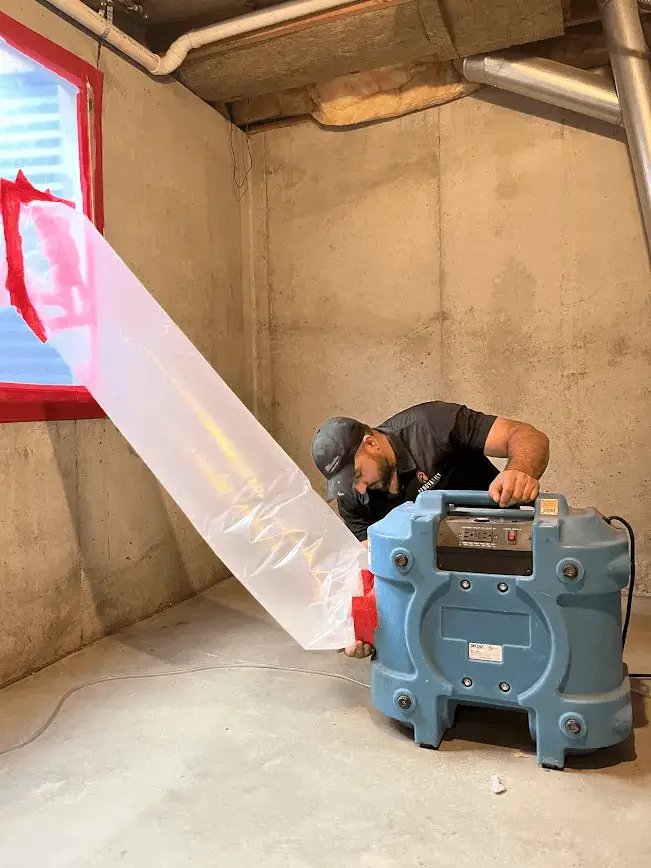
Professional water damage drying involves more than placing fans around a wet room. It requires identifying affected materials, controlling moisture in the air, and checking how the building responds throughout the process.
The following steps explain how a typical structural drying process works.
Step 1: Moisture Inspection
The first step is determining where the water traveled and which materials absorbed it.
A restoration professional may inspect:
- Visible water stains and damaged surfaces.
- Baseboards and lower wall sections.
- Flooring and subfloor areas.
- Wall and ceiling cavities.
- Insulation and accessible structural components.
Moisture meters help assess moisture conditions in building materials. Thermal imaging may also help identify temperature patterns associated with possible moisture, although those readings need to be verified with appropriate inspection tools.
The purpose is to identify both visible and suspected hidden moisture before deciding on the drying approach.
Step 2: Water Extraction
If standing water is present, it needs to be removed before the structural drying process can work effectively.
Professional extraction equipment removes accumulated water from affected floors, carpets, and other accessible surfaces.
Water extraction and structural drying serve different purposes.
Extraction removes liquid water. Structural drying addresses the moisture that remains inside building materials and surrounding air.
This distinction explains why a property can look clean after water removal but still require several additional days of drying.
Step 3: Air Mover Placement
Air movers are professional drying fans designed to move air across wet surfaces.
They help increase evaporation by replacing the layer of humid air near a wet material with drier surrounding air.
Air movers may be positioned around:
- Wet flooring.
- Carpet and exposed padding.
- Damp drywall surfaces.
- Open wall cavities.
- Other affected building materials.
Their placement depends on the room layout, moisture distribution, and the materials being dried.
Simply using more fans does not always mean faster drying. Airflow must be coordinated with humidity control.
Step 4: Dehumidification
As water evaporates from building materials, moisture enters the indoor air.
Dehumidifiers for water damage remove this excess moisture, allowing the drying process to continue.
Professional restoration equipment may include refrigerant or desiccant dehumidifiers, depending on the conditions and drying requirements.
The equipment is selected based on factors such as:
- The amount of moisture present.
- The size and configuration of the affected area.
- Indoor temperature and humidity.
- The type of building materials.
- The required drying conditions.
Without adequate humidity control, water may evaporate from surfaces more slowly, extending the drying period.
Step 5: Moisture Monitoring
Moisture monitoring is how restoration professionals evaluate whether the drying process is working.
Readings may be taken from affected drywall, wood, flooring, and other materials at different stages.
Professionals compare readings over time and assess them against appropriate dry standards or unaffected reference materials.
For example, if a wet wall shows decreasing moisture readings over successive inspections, that provides evidence of drying progress.
If readings stop improving, the drying setup may need adjustment or further investigation.
Step 6: Drying Completion and Restoration
Drying is considered complete when affected materials meet appropriate moisture targets.
This does not automatically mean every damaged material can be reused.
Some drywall, insulation, flooring, or other components may require replacement if they have deteriorated, become contaminated, or cannot be adequately restored.
Once drying is complete, the remaining restoration work can proceed.
RenovaBilt Construction & Restoration follows this assessment, extraction, equipment placement, drying, and moisture-monitoring approach as part of its structural drying services in Denver and Aurora.
Can You Dry a House After Water Damage Without Professional Equipment?
Minor surface moisture may be manageable with basic household cleaning and ventilation, provided the water source is clean, the affected area is small, and no building materials have become saturated.
However, household fans and portable dehumidifiers are not always sufficient for water damage involving concealed moisture.
There are several reasons:
Household fans have limited airflow. They may help dry exposed surfaces but cannot effectively address moisture trapped inside walls, insulation, or beneath flooring.
Standard dehumidifiers have limited capacity. Their performance depends on room conditions, moisture levels, and the amount of water being released by wet materials.
Hidden moisture can go undetected. A room may feel comfortable even when moisture remains inside the building structure.
Some water damage requires material removal. Floodwater, sewage backups, and other contaminated sources can create health and sanitation concerns that ordinary household drying cannot address.
If water has entered wall cavities, insulation, subfloors, or multiple rooms, a professional moisture assessment is the safer way to determine what needs to be dried or removed.
What Happens If a House Is Not Dried Completely?
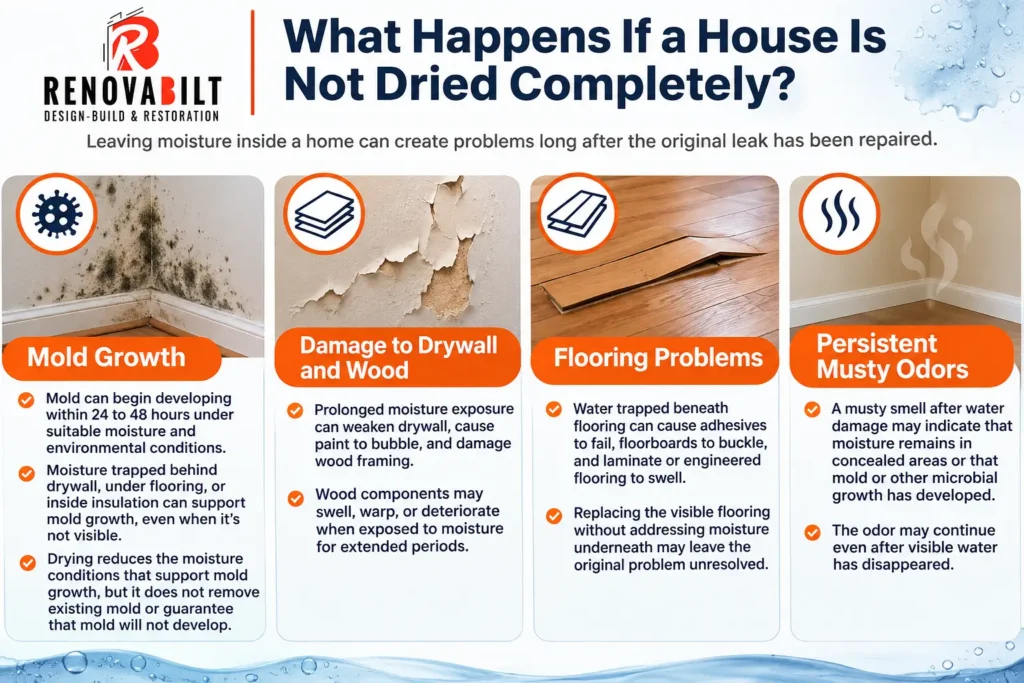
Leaving moisture inside a home can create problems long after the original leak has been repaired.
Mold Growth
Mold can begin developing within 24 to 48 hours under suitable moisture and environmental conditions. This is one reason water damage should be addressed promptly.
Moisture trapped behind drywall, under flooring, or inside insulation can support mold growth even when the affected area is not visible.
Drying reduces the moisture conditions that support mold growth, but it does not remove existing mold or guarantee that mold will not develop.
Damage to Drywall and Wood
Prolonged moisture exposure can weaken drywall, cause paint to bubble, and damage wood framing.
Wood components may swell, warp, or deteriorate when exposed to moisture for extended periods.
Flooring Problems
Water trapped beneath flooring can cause adhesives to fail, floorboards to buckle, and laminate or engineered flooring to swell.
Replacing the visible flooring without addressing moisture underneath may leave the original problem unresolved.
Persistent Musty Odors
A musty smell after water damage may indicate that moisture remains in concealed areas or that mold or other microbial growth has developed.
The odor may continue even after visible water has disappeared.
For more information on this, please follow the EPA’s guide to mold, moisture, and your home.
How Can You Tell When Your House Is Completely Dry?
A property can look dry without being fully dry. Homeowners should not rely on appearance, touch, or smell alone.
Here are some indicators that professionals consider during a drying assessment:
- Moisture readings have stabilized at acceptable levels: Affected materials meet appropriate moisture targets based on their type and unaffected reference conditions.
- Drying progress has been documented: Measurements taken during the drying process show that moisture levels have decreased as expected.
- No concealed wet areas remain: Accessible wall cavities, flooring systems, and other affected locations have been assessed.
- Materials are suitable for restoration: Damaged materials that cannot be adequately dried or restored have been identified for removal or replacement.
- Indoor humidity is under control: The drying environment no longer contains excessive moisture that could interfere with the restoration process.
These checks provide a more reliable basis for determining completion than simply waiting a set number of days.
Water Damage in Denver: Why Prompt Drying Matters
Denver homeowners can experience water damage from several sources, including burst pipes during freezing weather, plumbing failures, appliance leaks, basement flooding, and roof leaks.
Cold weather can create additional challenges when frozen pipes thaw and begin leaking inside walls or ceilings. Water may remain concealed until staining, swelling, or other damage becomes visible.
Basement water intrusion is another concern. Water entering through foundation openings, failed sump pumps, or plumbing problems can affect concrete slabs, carpet, drywall, and stored belongings.
In these situations, removing visible water is only part of the recovery process.
A proper assessment should determine how far the moisture traveled, which materials absorbed it, and whether targeted structural drying is needed.
RenovaBilt Construction & Restoration provides water damage drying and restoration services in Denver, Aurora, and surrounding communities. Founded by Farid Bayot, the company brings more than 10 years of hands-on restoration experience to residential and commercial projects.
Farid holds IICRC certification and the G13 – National Residential Building Contractor (C) examination credential from the International Code Council. RenovaBilt also holds Colorado Contractor License #2026 2655471 00 CL.
When water damage affects your property, early assessment and appropriate drying can help limit further material damage and reduce conditions that support mold growth.
For professional assistance, visit our water damage restoration and repair page.
Get Professional Structural Drying Help in Denver and Aurora
Water damage does not end when the visible water disappears. Moisture can remain inside drywall, flooring, insulation, wood framing, and concrete long after the initial cleanup.
The right drying approach depends on where the water traveled, which materials were affected, and how much moisture remains.
RenovaBilt Construction & Restoration provides professional Structural Drying and Dehumidification in Denver and Aurora, CO. Our team uses professional drying equipment and moisture monitoring to assess affected materials and track drying progress.
If your property has experienced a plumbing leak, basement flood, burst pipe, or roof leak, call RenovaBilt for assistance.
Call 720-499-8693 for 24/7 emergency assistance.
RenovaBilt Construction & Restoration
3300 S Parker Rd Ste 200, Aurora, CO 80014
Colorado Contractor License #2026 2655471 00 CL
Frequently Asked Questions
Dehumidifiers should run for as long as necessary to bring affected materials to appropriate moisture levels. In many residential drying situations, this means several days. Larger or more complex losses may require longer. Moisture readings, rather than a fixed operating schedule, should determine when the equipment can be removed.
A small amount of surface moisture may dry naturally under suitable conditions. However, water absorbed by drywall, insulation, wood, or flooring may remain trapped. Natural ventilation alone may not remove this moisture effectively, particularly in concealed spaces.
Drywall may take several days or longer to dry, depending on how much water it absorbed, the thickness of the material, surrounding humidity, and airflow. If the drywall is saturated, deteriorated, or contaminated, removal and replacement may be more appropriate than attempting to dry it in place.
A flooded basement may require approximately 3 to 7 days or longer for structural drying. The timeline depends on the amount of water, the materials affected, concrete slab moisture, wall construction, and indoor conditions. Extensive flooding can take considerably longer.
Yes. Concrete releases absorbed moisture over time, but the process can be slow. Its drying rate depends on slab thickness, moisture content, temperature, humidity, and whether flooring covers the surface. A concrete floor that feels dry may still contain elevated internal moisture.
Yes. Mold can develop in concealed areas where moisture remains, even when the surrounding room feels dry. Wall cavities, insulation, subfloors, and spaces beneath flooring can retain moisture that is not detectable by touch.
Baseboards may need to be removed when moisture has reached the lower wall or the space behind the trim. Removing them can provide access for inspection and targeted drying. Whether removal is necessary depends on the extent of water intrusion and the condition of the materials.
Coverage depends on the insurance policy, the cause of the water damage, and the circumstances of the loss. Sudden and accidental water damage may be covered under some policies, while gradual leaks or neglected maintenance may be excluded. Homeowners should contact their insurance provider to confirm coverage. Also check the NAIC guidance on homeowners insurance and burst pipes for more details.
It depends on the extent of the damage, the affected rooms, the water source, and any safety concerns. Some properties can remain occupied during drying. However, sewage contamination, electrical hazards, extensive demolition, or other unsafe conditions may require occupants to stay elsewhere until the affected areas are safe.
Contact a restoration professional as soon as possible if water has affected multiple rooms, entered walls or flooring, resulted from a burst pipe, or caused basement flooding. Professional assessment is also appropriate when a leak has gone unnoticed, or moisture remains after visible water has been removed.