
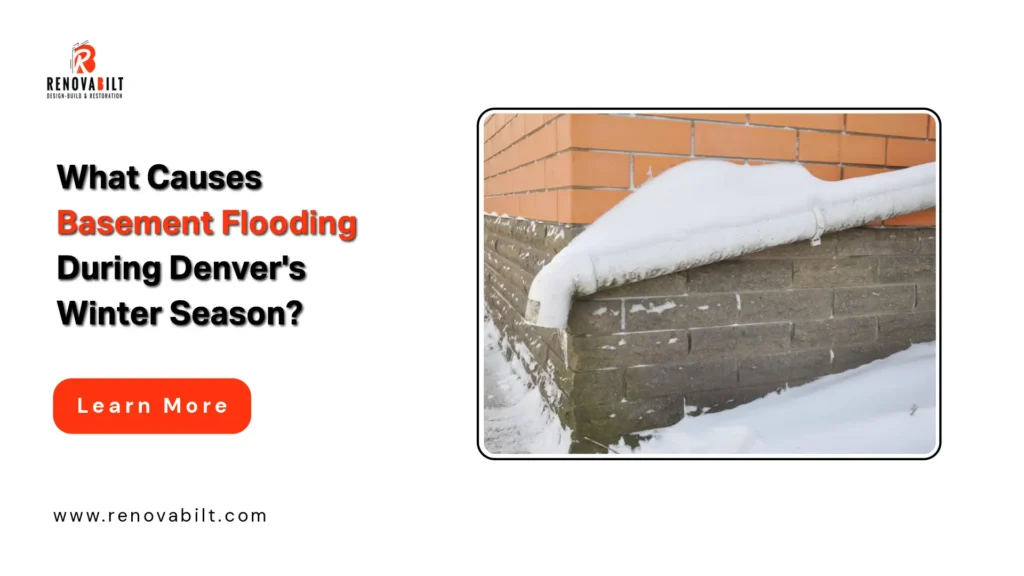
Imagine waking up on a cold Denver morning to find water spreading across your basement floor. Your carpet is soaked, furniture and stored belongings are damaged, and you’re left wondering where the water came from. Was it a frozen pipe that burst overnight, melting snow seeping through the foundation, or a sump pump that stopped working?
Beyond the immediate mess, basement flooding can lead to expensive repairs, hidden moisture, and mold growth if the affected areas are not dried properly. You may also be unsure whether your homeowners insurance will cover the damage or who to call first.
Denver’s winter weather makes these problems particularly concerning. Temperatures can drop below freezing overnight and rise above freezing during the day, creating repeated freeze-thaw cycles that affect plumbing, soil, drainage systems, and foundations.
Understanding what causes basement flooding during Denver’s winter season can help you recognize early warning signs and take appropriate action. In this guide, we’ll explain seven common causes of winter basement flooding, how to identify the source of water, and what you can do to protect your home from further damage.
Why Is Basement Flooding a Winter Concern in Denver?
Denver’s winter weather creates several conditions that can increase the risk of basement water intrusion.
According to the National Weather Service’s 1991–2020 climate data, Denver International Airport receives approximately 47 inches of snowfall during an average snow season. The amount varies significantly across the metro area. Western and southwestern Denver suburbs can receive approximately 65–70 inches annually, compared with around 47 inches near the airport.
Denver also experiences repeated freeze-thaw cycles. Daytime temperatures may rise enough to melt accumulated snow, while nighttime temperatures allow the remaining water to freeze again.
This cycle can affect:
- Water supply pipes running through unheated spaces.
- Soil surrounding basement foundation walls.
- Exterior drainage systems and downspout discharge areas.
- Sump pump discharge lines.
- Basement windows, window wells, and foundation openings.
- Older plumbing and underground water lines.
The result is that water can enter a basement through several different pathways. Identifying the correct source matters because removing standing water without fixing the underlying problem will not prevent another incident.
7 Common Causes of Basement Flooding During Denver’s Winter
1. Frozen and Burst Water Pipes
Frozen pipes are one of the most serious winter-related causes of basement water damage.
When water freezes inside a pipe, it expands and creates pressure within the plumbing system. This pressure can damage the pipe and cause it to split. A pipe may not release a significant amount of water until the ice begins to thaw and normal water pressure returns.
This is why some homeowners discover a basement flood after temperatures begin to rise rather than during the coldest part of a winter storm.
Certain areas of a home are more vulnerable to frozen pipes:
- Pipes running along exterior basement walls.
- Plumbing in unfinished or unheated basements.
- Pipes inside crawl spaces and garages.
- Water lines near foundation penetrations.
- Pipes inside poorly insulated cabinets.
- Plumbing in vacant properties with insufficient heating.
We specifically recommend insulating vulnerable pipes, keeping attached garage doors closed during severe cold, and maintaining indoor temperatures above 65°F when leaving a property for several days.
An important warning: If a faucet suddenly produces little or no water during freezing weather, a frozen pipe may be responsible. Do not ignore the problem. A licensed plumber can help locate and safely thaw the affected section before it causes further damage.
If a pipe bursts, shut off the main water supply if it is safe to access. Avoid entering standing water where electrical equipment or outlets may be submerged.
For extensive water release, prompt professional intervention can limit damage to flooring, drywall, insulation, framing, and stored belongings.
Learn more about Emergency Burst Pipe Cleanup & Restoration and what to do when a plumbing failure causes water damage.
2. Rapid Snowmelt Around the Foundation
Snowmelt is another common reason homeowners experience basement water intrusion during winter and early spring.
When snow accumulates around the property, it can remain in contact with the foundation for several days. A warm afternoon may cause the snow to melt, allowing water to collect near basement walls.
If the soil cannot absorb or drain the water quickly enough, moisture can build up against the foundation. Water may then enter through:
- Small foundation cracks.
- Gaps around utility penetrations.
- Basement window wells.
- Poorly sealed wall-floor joints.
- Damaged foundation waterproofing.
- Existing construction defects.
Homes with landscaping that slopes toward the foundation face an increased risk because surface water naturally moves toward the structure instead of away from it.
What homeowners should check:
After a snowfall, inspect the area immediately surrounding the foundation. Look for accumulated snow, standing water, blocked drainage paths, and downspouts discharging too close to the house.
Move snow away from basement windows and foundation openings where practical. Make sure downspouts discharge water away from the foundation through a suitable drainage route.
Do not assume that a basement leak is harmless simply because the water disappears after the snow melts. Repeated moisture entry can affect building materials over time.
3. Freeze-Thaw Cycles and Foundation Cracks
Denver’s repeated temperature changes can place stress on the ground surrounding residential foundations.
When moisture in the soil freezes, it expands. As temperatures rise, the ice melts, and the soil changes again. Repeated freezing and thawing can contribute to ground movement, particularly where drainage is poor or the soil retains moisture.
This movement can place additional stress on foundation walls and existing cracks.
The same weather pattern can affect underground water infrastructure. RenovaBilt explains that prolonged cold spells followed by rapid warming can cause ground movement that stresses buried water mains. Older pipes may be more vulnerable because they have experienced years of repeated stress.
For homeowners, the practical concern is twofold:
- Ground movement can worsen existing weaknesses around a foundation.
- A damaged underground water line can introduce water into the soil surrounding the property.
Watch for the following warning signs:
- New or widening cracks in basement walls.
- Water seeping through existing cracks.
- Dampness along the bottom of foundation walls.
- White mineral deposits on concrete or masonry, sometimes called efflorescence.
- Cracks that become visibly wetter after a temperature change.
- Unexplained water accumulation near the foundation.
Not every foundation crack indicates structural failure. However, recurring water intrusion, significant crack movement, or bowing walls should be evaluated by an appropriate foundation professional.
4. Clogged Gutters and Improper Downspout Drainage
Gutters and downspouts play a direct role in protecting a home’s foundation.
Their job is to collect roof runoff and carry it away from the building. When gutters become clogged with leaves, debris, or frozen material, water may overflow and collect beside the foundation.
During winter, accumulated snow and ice can make the situation worse.
A downspout that terminates too close to the house can also direct large amounts of melting snow or roof runoff toward basement walls.
This problem is particularly concerning when the surrounding ground slopes toward the home or when the soil is already saturated.
Prevention measures:
- Clean gutters before winter weather arrives.
- Inspect downspouts for blockages and ice buildup.
- Check that downspouts discharge away from the foundation.
- Keep drainage extensions in place and properly positioned.
- Correct landscaping that directs water toward basement walls.
- Inspect basement window wells for accumulated snow and debris.
A properly functioning drainage system is one of the first things homeowners should inspect when basement moisture appears after snowfall.
5. Sump Pump Failure or Frozen Discharge Lines
A sump pump helps remove groundwater that collects around or beneath a basement foundation.
Homes with sump pits depend on these systems to move collected water away from the building. During periods of increased groundwater pressure or snowmelt, a working sump pump can help prevent basement flooding.
However, winter conditions can interfere with its operation.
Common problems include:
- Frozen exterior discharge pipes.
- Discharge lines blocked by ice or debris.
- Mechanical or electrical pump failure.
- A stuck float switch.
- A damaged check valve.
- Insufficient pump capacity.
- Power outages during winter storms.
A sump pump may continue running without successfully removing water if its discharge line is frozen or obstructed. In that situation, water can accumulate in the sump pit and eventually overflow.
How to reduce the risk:
Test the sump pump before winter and periodically during the season. Check the float switch, inspect the discharge line, and confirm that water is being directed away from the foundation.
Consider installing a battery-powered backup system if the basement depends on a sump pump. FEMA recommends backup power for sump pumps because electrical outages can occur during severe weather.
A high-water alarm can also alert homeowners when water begins rising in the sump pit.
Do not ignore unusual pump noises, continuous operation, or a pump that runs without discharging water.
6. Sewer Backups and Blocked Drain Lines
Basement flooding does not always involve groundwater or broken water supply pipes. Sometimes, water enters through the home’s drainage system.
A sewer backup occurs when wastewater cannot flow properly through the plumbing system and reverses direction into the home.
Possible causes include:
- Blockages in the building’s sewer lateral.
- Tree roots entering underground sewer pipes.
- Damaged or deteriorating drain lines.
- Accumulated grease and debris.
- Municipal sewer system problems.
- Excessive water entering a drainage system during certain weather conditions.
During winter, frozen or damaged sections of plumbing can also contribute to drainage problems.
A sewer backup may cause water to appear through basement floor drains, toilets, utility sinks, or other plumbing fixtures.
How to recognize a sewer backup:
- Water emerging from a basement floor drain.
- Multiple plumbing fixtures draining slowly.
- Gurgling sounds from toilets or drains.
- Wastewater with an unpleasant odor.
- Water appearing when other household fixtures are being used.
Sewage-contaminated water presents a different cleanup concern from a clean-water pipe leak. It can contain bacteria and other biological contaminants.
Avoid direct contact with the water and keep children and pets away. Do not use ordinary household fans to circulate potentially contaminated air or water droplets.
A licensed plumber should investigate the drainage problem. Professional cleanup and disinfection may also be necessary before the affected basement can be safely used again.
Homeowners with recurring sewer backup concerns can ask a qualified plumber whether a properly installed backwater valve is appropriate for their property. FEMA identifies backwater valves as one way to help prevent wastewater from flowing backward into a building.
7. Poor Foundation Waterproofing and Basement Window Leaks
Some basement flooding problems are not caused by a single winter storm. They occur because water has found an existing weakness in the home’s exterior protection.
Foundation waterproofing systems are intended to limit water penetration through below-grade walls. When these systems deteriorate, water can enter through cracks, joints, and other openings.
Basement window wells are another common entry point.
Snow can accumulate inside a window well, and melting water may collect against the window frame. If the window seal is damaged, the well drain is blocked, or the window is not properly protected, water can enter the basement.
Other potential problem areas include:
- Poorly sealed foundation penetrations.
- Deteriorated window caulking.
- Damaged exterior waterproofing membranes.
- Missing or ineffective window well covers.
- Clogged window well drains.
- Gaps around basement doors.
Homeowners should inspect these areas before winter and again after significant snowfall or rapid snowmelt.
If water repeatedly enters through the same location, identify and repair the exterior entry point rather than relying on interior sealants alone.
How to Identify the Source of Basement Water
Finding the source of water is often more difficult than removing it.
The location, appearance, timing, and condition of the affected area can provide useful clues. However, these observations are indicators, not a substitute for a professional inspection.
Use the following guide as an initial assessment.
| What you notice | Possible cause | What to investigate |
| Sudden water release near exposed plumbing | Burst or leaking pipe | Supply lines, valves, fittings, and pipe joints |
| Damp foundation walls after snowmelt | Foundation seepage | Exterior grading, cracks, and waterproofing |
| Water around basement windows | Window well drainage problem | Window seals, covers, and well drains |
| Water collecting in the sump pit | Increased groundwater or pump problem | Pump operation and discharge line |
| Water coming through floor drains | Sewer or drain backup | Sewer lateral and drain lines |
| Wet basement near a downspout | Roof runoff drainage problem | Gutter condition and discharge location |
| Dampness that returns after each thaw | Repeated water intrusion | Foundation drainage and exterior water pathways |
Why the Timing of Water Entry Matters
The timing of basement flooding can help narrow down the possible cause.
Water appears during extreme cold: Investigate frozen pipes, exposed plumbing, and heating failures.
Water appears after a sudden warm spell: Check for snowmelt, foundation seepage, blocked downspouts, and frozen sump discharge lines.
Water appears during or after a power outage: Inspect the sump pump and any backup power system.
Water appears when toilets or sinks are used: Investigate a possible drain obstruction or sewer backup.
Water appears repeatedly in the same location: Look for an ongoing plumbing leak, foundation crack, window well problem, or drainage defect.
Keep a record of when the water appeared, recent weather conditions, and the areas affected. Photographs can help a restoration professional or plumber understand the problem.
What Should You Do If Your Denver Basement Floods in Winter?
The first response should focus on safety, stopping additional water entry, and preventing further damage.
Step 1: Check for Electrical and Structural Hazards
Never walk into standing water if electrical outlets, extension cords, appliances, or electrical equipment may be submerged.
If you suspect an electrical hazard, stay out of the affected area and contact emergency services or a qualified electrician as appropriate.
Do not attempt to operate electrical equipment while standing in water.
Step 2: Stop the Water Source
If a plumbing pipe has burst, locate the main water shutoff valve and turn it off if you can reach it safely.
If the water is coming from a sewer backup, stop using toilets, sinks, washing machines, and other plumbing fixtures until the cause is identified.
For foundation seepage or snowmelt intrusion, identify the exterior drainage problem and take reasonable steps to prevent additional water from entering.
Step 3: Document the Damage
Before cleanup begins, take photographs and videos of:
- Standing water and affected rooms.
- Wet flooring and carpeting.
- Damaged drywall and baseboards.
- Furniture and personal belongings.
- Visible plumbing damage.
- The suspected source of water.
Contact your insurance company and ask about the documentation and claim requirements for your policy.
Coverage depends on the cause of the loss and the policy’s terms. A standard homeowners policy may treat sudden plumbing discharge, sewer backup, and surface flooding differently.
Step 4: Remove Water and Begin Cleanup
Standing water should be removed as soon as it is safe to do so.
However, the cleanup method depends on the water source.
Clean water from a supply pipe may require a different procedure from groundwater, stormwater, or sewage-contaminated water.
Do not assume that all basement water is safe to handle. If the source is unknown, treat it cautiously until it has been assessed.
Wet carpets, padding, insulation, drywall, and other absorbent materials may require removal if they cannot be properly cleaned and dried.
Step 5: Arrange Professional Structural Drying
Removing visible water does not mean the basement is dry.
Moisture can remain inside:
- Drywall and wall cavities.
- Carpet padding and subfloors.
- Wood framing.
- Baseboards and trim.
- Insulation.
- Concrete and masonry.
- Areas beneath cabinets and built-in storage.
The National Institute for Occupational Safety and Health (NIOSH) recommends drying wet or damp materials within 24–48 hours to reduce the likelihood of mold growth.
Professional drying may involve water extraction, commercial air movers, dehumidifiers, moisture meters, and targeted inspections.
A restoration professional should monitor moisture levels rather than relying only on whether surfaces feel dry.
Learn more about Water Damage Restoration when your basement has experienced water intrusion.
Why Structural Drying Matters After Winter Basement Flooding
Structural drying is the process of removing moisture from the building materials and structural components affected by water damage.
It goes beyond removing standing water or placing a few household fans in the basement.
A basement can appear dry while moisture remains trapped inside wall cavities, flooring assemblies, insulation, and other materials.
If this moisture is not addressed, it can contribute to mold growth, material deterioration, unpleasant odors, and additional repair costs.
What Does Professional Structural Drying Involve?
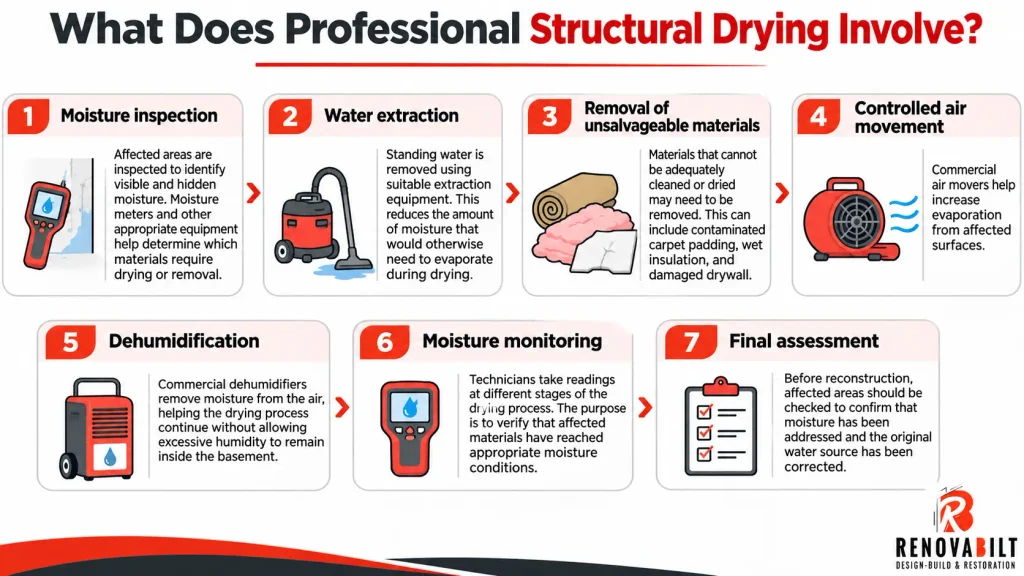
The process generally includes several stages.
1. Moisture inspection
Affected areas are inspected to identify visible and hidden moisture. Moisture meters and other appropriate equipment help determine which materials require drying or removal.
2. Water extraction
Standing water is removed using suitable extraction equipment. This reduces the amount of moisture that would otherwise need to evaporate during drying.
3. Removal of unsalvageable materials
Materials that cannot be adequately cleaned or dried may need to be removed. This can include contaminated carpet padding, wet insulation, and damaged drywall.
4. Controlled air movement
Commercial air movers help increase evaporation from affected surfaces.
5. Dehumidification
Commercial dehumidifiers remove moisture from the air, helping the drying process continue without allowing excessive humidity to remain inside the basement.
6. Moisture monitoring
Technicians take readings at different stages of the drying process. The purpose is to verify that affected materials have reached appropriate moisture conditions.
7. Final assessment
Before reconstruction, affected areas should be checked to confirm that moisture has been addressed and the original water source has been corrected.
For more information, visit RenovaBilt’s Structural Drying and Dehumidification service page.
Can Winter Basement Flooding Cause Mold Growth?
Yes. Winter basement flooding can create conditions that support mold growth, particularly when wet building materials are not dried promptly.
Mold does not require warm summer weather to become a problem. It needs moisture and suitable conditions.
A heated basement with wet drywall, carpet, insulation, or wood framing can provide those conditions even when outdoor temperatures are below freezing.
Common warning signs include:
- Musty or earthy odors.
- Dark spots on drywall or baseboards.
- Discoloration near the bottom of basement walls.
- Damp carpet or persistent flooring odors.
- Visible growth around window frames.
- Moisture returning after an earlier cleanup.
The EPA recommends drying wet materials within 24–48 hours. This is a practical response window, not a guarantee that mold cannot develop after that period or that every material can be saved.
If mold is already present, cleaning visible surfaces alone may not address the underlying problem. The moisture source must be corrected, affected materials assessed, and remediation performed when necessary.
People with asthma, allergies, or other respiratory sensitivities should avoid disturbing suspected mold growth and seek appropriate professional assistance.
How to Prevent Basement Flooding During Denver’s Winter
Preventive maintenance is usually less expensive and disruptive than dealing with a flooded basement.
A winter inspection should cover plumbing, exterior drainage, foundation openings, and basement equipment.
Before Winter
- Insulate exposed water pipes in unheated areas.
- Disconnect garden hoses and winterize outdoor faucets.
- Drain and winterize irrigation systems according to the manufacturer’s instructions.
- Clean gutters and inspect downspouts.
- Check basement window wells and their drainage.
- Inspect visible foundation cracks.
- Test the sump pump and backup system.
- Locate the main water shutoff valve.
- Seal gaps that allow cold air to reach plumbing.
- Check the heating system and maintain adequate indoor temperatures.
During Extreme Cold
- Keep the thermostat set consistently rather than lowering it significantly overnight.
- Keep garage doors closed if plumbing runs through the garage.
- Open cabinet doors where exposed plumbing needs access to warmer indoor air.
- Monitor vulnerable pipes during prolonged freezing conditions.
- Check unheated spaces and vacant properties regularly.
- Watch for reduced water flow, unusual pipe noises, and signs of leakage.
RenovaBilt recommends keeping the thermostat above 65°F when leaving a property for several days.
If you suspect a frozen pipe, avoid using an open flame to thaw it. A licensed plumber can safely address inaccessible or severely frozen plumbing.
After Snowfall and During a Thaw
- Remove accumulated snow from vulnerable basement window wells.
- Check that gutters and downspouts are draining properly.
- Make sure surface water moves away from the foundation.
- Inspect the basement for new damp spots.
- Check that sump pump discharge lines are not frozen.
- Look for water pooling near the foundation.
- Monitor cracks and previously repaired areas for moisture.
The period immediately after a rapid temperature increase deserves attention. A basement that remained dry during a snowstorm may begin showing water intrusion once accumulated snow starts melting.
When Should You Call a Water Damage Restoration Company?
Not every damp basement requires the same response. A small amount of condensation on a cold surface is different from water entering through a burst pipe or foundation wall.
Consider professional restoration assistance when:
- A pipe has burst and released water into the basement.
- Standing water has spread across flooring.
- Drywall, insulation, or carpet has become wet.
- Water has entered wall cavities or beneath flooring.
- A basement has experienced repeated flooding.
- There is a persistent musty odor after water intrusion.
- Water damage has affected multiple rooms.
- The source of the water is unclear.
- Sewage or potentially contaminated water has entered the property.
A restoration company can assess the affected materials, remove water, establish a drying plan, monitor moisture, and determine which materials may need removal.
A plumber or foundation specialist may also be needed to correct the original cause. Restoration and source repair are related but separate parts of resolving a basement flooding problem.
How RenovaBilt Construction & Restoration Helps Denver Homeowners
When basement flooding occurs, homeowners need clear information about the damage, the cleanup process, and the work required to return the affected space to a safe condition.
RenovaBilt Construction & Restoration serves homeowners in Denver, Aurora, and surrounding Colorado communities.
Founded by Farid Bayot, RenovaBilt brings more than 10 years of hands-on restoration experience to residential property damage projects. Farid is an IICRC Certified Specialist and holds the G13 – National Residential Building Contractor (C) examination credential from the International Code Council.
Our approach focuses on identifying the source of the damage, assessing affected building materials, and addressing moisture rather than simply removing visible water.
For winter-related water damage, the appropriate response may include water extraction, affected-material assessment, structural drying, dehumidification, and coordination of necessary repairs.
RenovaBilt holds Colorado Contractor License #2026 2655471 00 CL.
If your basement has flooded because of a burst pipe, snowmelt intrusion, or another water-related problem, contact RenovaBilt Construction & Restoration at 720-499-8693.
Final Thoughts
Basement flooding during Denver’s winter season can have several causes, and the visible water is not always a reliable indication of where the problem started.
Frozen pipes, rapid snowmelt, foundation cracks, clogged gutters, failed sump pumps, and sewer backups can all contribute to winter water damage. Understanding these risks and inspecting vulnerable areas before and after major temperature changes can help homeowners prevent costly repairs.
If water has already entered your basement, address the source, prioritize safety, and arrange proper drying before moisture spreads into hidden building materials.
RenovaBilt Construction & Restoration provides water damage restoration and structural drying services for homeowners in Denver, Aurora, and surrounding Colorado communities. Call 720-499-8693 for assistance with residential water damage.
Frequently Asked Questions
Melting snow can collect around the foundation, especially when the ground is frozen, compacted, or poorly drained. Water may then enter through foundation cracks, basement window wells, wall-floor joints, or damaged waterproofing. Improper grading and blocked downspouts can make the problem worse.
Yes. Ice can obstruct a pipe and create pressure that damages the plumbing. When temperatures rise and the ice melts, water can escape through the damaged section. This is why some burst-pipe floods are discovered during a thaw rather than during the coldest part of winter.
A burst pipe often causes sudden water accumulation near plumbing, while foundation seepage is more commonly associated with damp walls, cracks, window wells, and periods of snowmelt or increased groundwater. However, these signs can overlap. A professional inspection may be needed to identify the source.
The pump itself is generally installed indoors, but its exterior discharge line can freeze or become obstructed. If water cannot leave the system, the sump pit may fill and overflow. Inspect the discharge route and test the pump before winter.
Begin safe water removal as soon as possible. The EPA recommends drying wet or damp materials within 24–48 hours to reduce the risk of mold growth. Hidden moisture in insulation, drywall, subfloors, and wall cavities may require professional moisture measurements and drying equipment.
Yes. A basement can flood because of a burst pipe, leaking plumbing connection, failed sump pump, sewer backup, groundwater seepage, or foundation defect. Heavy snowfall is not necessary for any of these problems to occur.
Coverage depends on the source of the water and the specific policy. Sudden and accidental plumbing discharge, sewer or drain backup, and surface flooding may be treated differently. Review your policy and contact your insurance company before assuming that a particular type of damage is covered.
Only after determining that the water is safe and that the area can be accessed without electrical hazards. Sewage and other contaminated water require different precautions. When the source is clean water, suitable air movers and dehumidifiers can help dry affected materials. Professional guidance is recommended when extensive materials are wet.
A musty smell can indicate persistent moisture in carpet padding, drywall, insulation, wood framing, or other materials. Snowmelt may have entered through foundation openings or window wells. Finding the moisture source and checking hidden materials are necessary to resolve the problem.
Water removal involves extracting standing water from the property. Structural drying addresses moisture that remains inside building materials and structural components. It uses appropriate air movement, dehumidification, moisture measurements, and monitoring to verify that affected areas have dried adequately.