
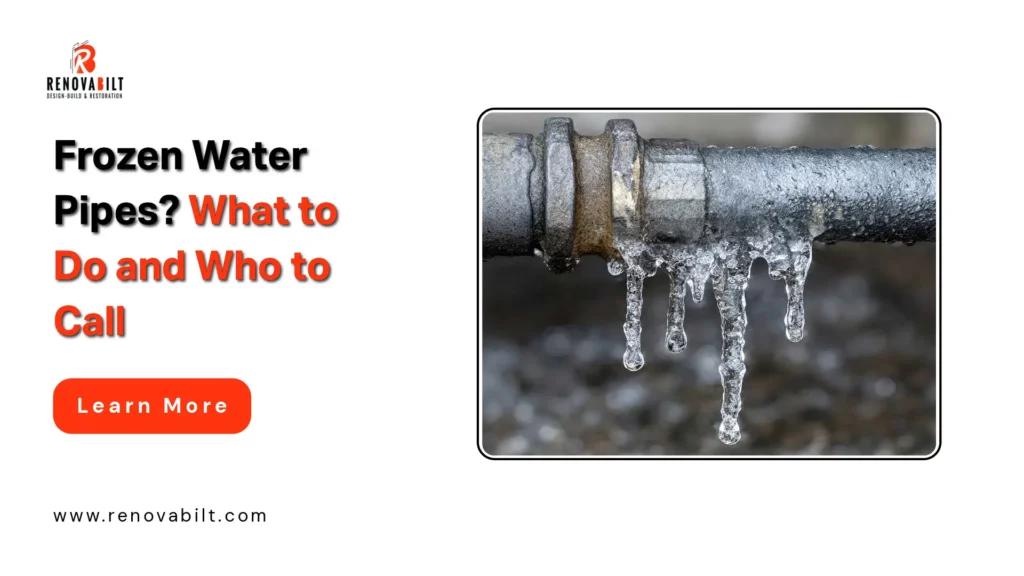
When water pipes freeze, the ice inside the pipe can restrict water flow and increase pressure, potentially causing the pipe to crack or burst. It is not true that a frozen pipe will always burst, but the damage might not be noticed until the ice begins to melt and water starts to flow once more.
Should your water pipes freeze, take action quickly. Leave the affected tap open, carefully warm a frozen pipe that is easy to access, and get in touch with a qualified plumber if you are unable to find or safely thaw the blockage. In the case of a burst pipe, turn off the main water supply if it is safe to do so and arrange for emergency plumbing repairs. When water has got into your walls, floors, ceilings, basement, or crawl space, professional water damage restoration might also be required.
Winter freezes pose a risk to the plumbing in vulnerable positions for homeowners in Denver and Aurora, Colorado, especially in pipes close to the exterior walls, in crawl spaces, and in areas that are not heated.
The guide tells you what actions to take if your pipes freeze, whom to contact if a pipe bursts, and how to cut down on the chance of permanent water damage.
What Should You Do First If Your Water Pipes Are Frozen?
If you suspect frozen plumbing, follow these steps in order.
1. Check which faucets are affected.
Turn on a cold-water faucet and check the flow. A weak stream or no water may indicate a frozen pipe. If only one fixture is affected, the blockage may be in the branch line serving that fixture. If several faucets have stopped working, the problem may involve a larger section of the plumbing system or the incoming water supply.
These symptoms can also indicate other plumbing problems, so do not assume freezing is the cause without further inspection.
2. Locate the suspected frozen section.
Check accessible pipes beneath sinks, along exterior walls, in basements, in crawl spaces, and near unheated garages. Look for frost, condensation, or unusually cold pipe surfaces.
Do not remove wall coverings, enter an unsafe crawl space, or dismantle plumbing to locate the blockage. A frozen section may be hidden inside a wall or ceiling.
3. Keep the affected faucet open.
Open the faucet served by the frozen pipe. As the ice melts, water needs somewhere to flow. The moving water can also help the remaining ice melt.
4. Apply gentle heat if the pipe is accessible.
Use a hair dryer, an electric heating pad suitable for the task, or towels soaked in warm water. Warm the affected section gradually rather than concentrating intense heat in one spot.
Never use a blowtorch, open flame, charcoal stove, or other combustion-based heating device to thaw plumbing. These methods can start fires or damage pipes.
5. Know when to stop.
If the frozen pipe is inside a wall, inaccessible, visibly damaged, or difficult to thaw, contact a licensed plumber. Stop immediately if you notice leaking, cracking, electrical hazards, or signs that the pipe has already burst.
Important: If you suspect the pipe has cracked or burst, shut off the main water supply before attempting to thaw it, provided you can reach the valve safely. Do not continue heating a damaged pipe.
American Red Cross provides similar guidance on recognizing frozen pipes and thawing accessible sections safely.
My Water Pipes Are Frozen: How Can I Tell If a Pipe Has Burst?
A frozen pipe and a burst pipe require different responses. A frozen pipe may still be intact, while a burst pipe can release water into the property as soon as the ice melts or the supply pressure returns.
Watch for these warning signs:
- No water or reduced water pressure: Ice may be blocking the line, although other plumbing issues can cause similar symptoms.
- Water stains on ceilings or walls: New discoloration, bubbling paint, or damp drywall may indicate a concealed leak.
- Water pooling on floors: Standing water near a sink, basement wall, utility room, or exposed pipe may indicate a rupture.
- Dripping or running-water sounds: If fixtures are off but you hear water moving inside a wall or ceiling, investigate promptly.
- Wet insulation or damp flooring: Water may have escaped inside a wall cavity or beneath a floor before becoming visible.
- A sudden increase in water usage: An unexplained change in your water bill or meter activity may indicate a leak.
One particularly important warning is a frozen pipe that appears to recover. Water may begin flowing again as the ice melts, revealing a crack that was previously blocked by ice.
If the water supply has been restored after a freeze, inspect accessible plumbing and nearby building materials for leaks. If you suspect a concealed rupture, arrange a professional inspection rather than assuming the problem is resolved.
My Pipes Burst. What Do I Do Right Now?
If you discover a burst pipe, prioritize safety and stop the water supply before focusing on cleanup.
Step 1: Shut Off the Main Water Supply
Locate your home’s main water shutoff valve and close it if you can do so safely. In many Denver-area homes, the valve is in a basement, crawl space, utility area, or near the point where the water service enters the building.
The exact location varies by property.
If the valve is stuck, inaccessible, or unsafe to reach, contact a plumber for assistance. Do not force a damaged valve.
Step 2: Stay Away From Electrical Hazards
Water and electricity can create a life-threatening hazard.
If water is near outlets, electrical panels, appliances, extension cords, or other energized equipment, do not enter the affected area or touch electrical equipment. Do not walk through standing water to reach a breaker panel.
Contact emergency services if there is an immediate danger, such as fire, electrical arcing, or a structural hazard. Have the electrical system assessed by a qualified professional before using equipment in a flooded area.
Step 3: Call a Plumber to Repair the Pipe
A licensed plumber should identify the failed section, repair or replace the damaged pipe, and check for other damage caused by freezing.
Tell the plumber where the leak occurred, whether the water supply has been shut off, and whether the pipe is accessible. Mention any additional frozen fixtures or signs of leaks elsewhere in the property.
If the pipe burst inside a wall, ceiling, or floor, explain that concealed water damage may also be present.
Step 4: Arrange Water Damage Cleanup and Drying
Stopping the leak does not remove the water already absorbed by the building.
If water has spread into drywall, insulation, carpet, hardwood flooring, subfloors, ceilings, or other building materials, contact a water damage restoration professional. Depending on the severity of the incident, the work may involve water extraction, moisture inspections, structural drying, dehumidification, and removal of materials that cannot be adequately dried or restored.
A plumber addresses the plumbing failure. A restoration professional addresses the resulting property damage. Some incidents require both services.
Step 5: Document the Damage
Once the area is safe to enter, photograph and record the damage before removing affected materials, where practical.
Document:
- The location of the broken pipe and visible leak.
- Standing water and affected rooms.
- Water stains, damaged flooring, ceilings, walls, and belongings.
- The date and approximate time the damage was discovered.
- Plumbing repairs and restoration work performed.
- Receipts, estimates, and communications with service providers.
Contact your homeowners insurance company promptly to report the incident and ask what documentation it requires. Take reasonable steps to prevent further damage, but avoid unsafe cleanup or repairs.
Pipe Burst: Who Should You Call?
The right professional depends on whether the problem is limited to the plumbing or has already affected your property.
| Situation | Who to call | Why |
| A pipe is frozen but not leaking | A licensed plumber if you cannot safely thaw it | To locate the blockage, thaw the pipe safely, and check for damage |
| A pipe has burst and water is flowing | A plumber immediately | To stop the leak and repair the damaged plumbing |
| Water is spreading through floors, walls, or ceilings | A water damage restoration company, alongside a plumber | To remove water, assess moisture, and dry affected building materials |
| A basement or crawl space has flooded | A restoration professional and a plumber as needed | To address standing water, concealed moisture, and the original leak |
| Water is near electrical equipment | Emergency services or qualified electrical professionals as appropriate | To address electrical hazards before cleanup begins |
| A pipe has been repaired, but the property still smells damp | A restoration professional | To investigate residual moisture and possible microbial growth |
Should You Call a Plumber or a Water Damage Restoration Company First?
If water is actively escaping from a broken pipe, the immediate priority is to stop the supply and control the leak. Call a plumber as soon as possible.
If water has already spread into the building, contact a restoration company promptly as well. You do not necessarily need to wait for every plumbing repair to be completed before arranging an assessment of the water damage, provided the area is safe.
For example, a pipe may burst in a second-floor bathroom while the homeowner is away. By the time the leak is discovered, water may have reached the bathroom floor, soaked the subfloor, stained the ceiling below, and entered wall cavities.
Replacing the damaged pipe will stop the source, but it will not dry those materials. The affected areas may need professional water extraction and drying to reduce the risk of further deterioration.
Why Frozen Pipes Can Cause More Damage Than You Can See
Water damage is not always limited to the area where the pipe broke.
When pressurized water escapes from plumbing, it can move through small openings, travel along framing, soak insulation, and collect beneath flooring. A ceiling stain may therefore be only one visible sign of a much larger problem.
Common areas of concern include:
Drywall and insulation: These materials can absorb water inside wall and ceiling cavities. Wet insulation may lose performance, while damp drywall may soften, swell, or require removal.
Hardwood floors and subfloors: Water can enter seams and move beneath the finished flooring. Wood may swell, cup, or warp, and the subfloor can remain wet after the surface appears dry.
Basements and crawl spaces: Water can collect in low areas and affect framing, stored belongings, insulation, and other materials. Restricted access may make inspection and drying more difficult.
Cabinets and built-in fixtures: Water can enter the spaces beneath sinks, behind cabinets, and around plumbing penetrations. Damage may remain hidden until materials begin to swell or odors develop.
Ceilings below the leak: Water from an upstairs bathroom or kitchen can travel through the floor assembly. A bulging ceiling may indicate trapped water and should be treated cautiously.
These conditions are why visual inspection alone may not be enough to determine whether a property is dry.
A restoration professional can assess affected areas using appropriate moisture-measuring equipment and determine where additional drying or material removal is needed.
How Quickly Should Water Damage Be Dried?
As soon as it is safe to begin, remove standing water and address moisture in affected materials.
The U.S. Environmental Protection Agency advises drying wet or damp areas and items within 24 to 48 hours to help prevent mold growth. This is a prevention guideline, not a guarantee that mold will or will not develop by a specific deadline.
The actual risk depends on factors such as the amount of water, the materials affected, temperature, humidity, and how quickly the moisture source is stopped.
For a burst pipe, prompt drying matters because moisture can remain trapped in wall cavities, insulation, subfloors, and other concealed spaces even after the visible water has been removed.
A professional drying process may include:
- Water extraction: Removing standing water from accessible surfaces and affected materials.
- Moisture assessment: Identifying wet areas and checking how far the water has traveled.
- Structural drying: Using appropriate air movement and dehumidification to remove moisture from building materials.
- Monitoring: Taking follow-up moisture readings to assess drying progress.
- Material decisions: Determining whether affected materials can be dried and retained or need removal and replacement.
- Mold assessment: Evaluating suspected mold growth and determining whether remediation is necessary.
Not every incident requires demolition or mold remediation. The appropriate response depends on the water source, the extent of damage, the affected materials, and the findings of the assessment.
If the water may contain sewage or other contaminants, avoid handling it yourself. Contaminated water can require specialized protective equipment, containment, cleaning, and disinfection.
The EPA’s guidance on mold and moisture explains why controlling the water source and drying affected materials are central to preventing mold problems.
What If My Pipes Are Frozen but No Water Has Leaked?
If your pipes are frozen and you have not found a leak, you may be able to prevent a more serious problem by acting promptly.
Start by checking the affected faucets and accessible plumbing. If the suspected frozen section is exposed and undamaged, use gentle heat to thaw it gradually. Keep the affected faucet open and monitor the pipe while it warms.
Before attempting to thaw the pipe yourself, make sure you know how to shut off the water supply if a leak develops. If the pipe is hidden, difficult to access, or appears damaged, contact a licensed plumber.
Once water flow returns, do not assume the plumbing is safe simply because the faucet works again.
Check for:
- Leaks at accessible joints and fittings.
- Water beneath sinks and around appliances.
- Damp drywall, ceilings, or baseboards.
- Water around the water heater or plumbing entry point.
- Additional faucets that still have low or no flow.
If you find a leak, shut off the water supply if it is safe and arrange a repair. If water has reached building materials, assess whether professional drying is necessary.
A frozen pipe that has not burst may not require restoration services. The goal is to identify the plumbing problem early and avoid unnecessary property damage.
Why Are Water Pipes Freezing in Denver and Aurora?
Pipes freeze when their temperature drops sufficiently for the water inside them to turn to ice. Exposure to cold air, inadequate insulation, and a lack of heat around the plumbing can all contribute.
In Denver and Aurora, particular attention should be paid to plumbing located in areas that are poorly heated or exposed to outdoor temperatures.
Pipes Near Exterior Walls
Water lines running along exterior walls may be exposed to colder conditions than pipes located inside heated areas. Gaps around wall penetrations and insufficient insulation can increase their exposure.
Unheated Basements and Crawl Spaces
Basements and crawl spaces can contain water lines that are exposed to cold air. Pipes in these locations may be particularly vulnerable when temperatures drop sharply.
Garages and Utility Areas
An attached garage may not be heated to the same temperature as the rest of the home. If plumbing runs through the garage, prolonged cold weather can increase the risk of freezing.
Vacant or Temporarily Unoccupied Homes
When a property is vacant, or the heating system is turned down too low, plumbing may be exposed to freezing temperatures for extended periods.
Poorly Insulated or Previously Frozen Pipes
Pipes that have frozen before deserve additional attention. Insulation, air leaks, pipe placement, and other underlying conditions may need to be addressed to reduce the risk of recurrence.
The exact freezing risk depends on the pipe’s location, insulation, exposure, and surrounding temperature. There is no single outdoor temperature that guarantees every pipe will freeze or remain safe.
How to Prevent Frozen Pipes Before the Next Cold Snap
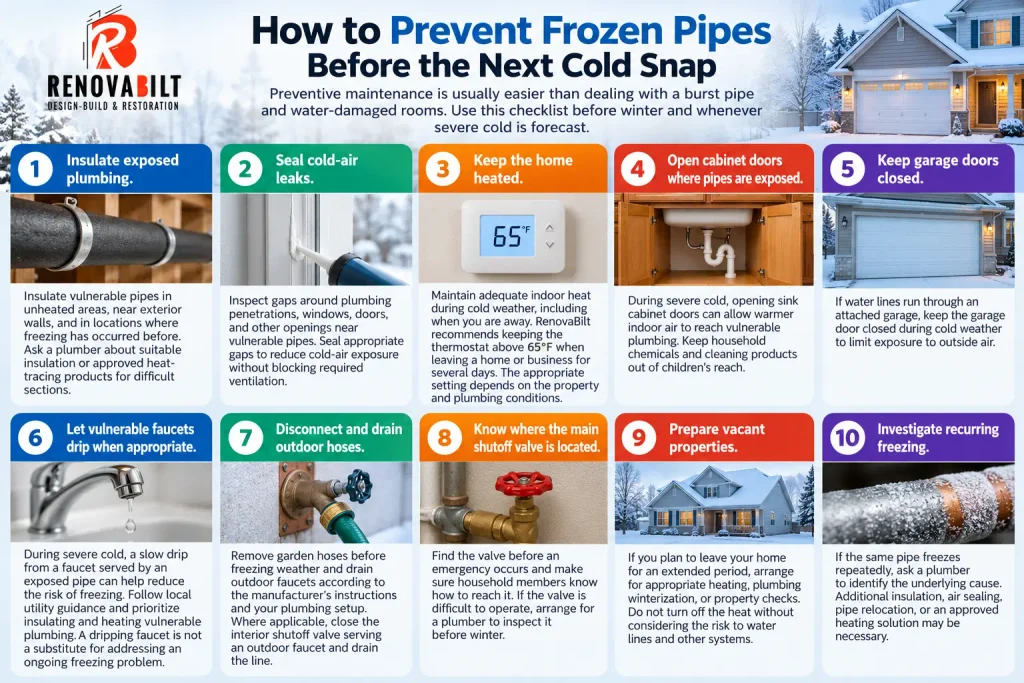
Preventive maintenance is usually easier than dealing with a burst pipe and water-damaged rooms.
Use this checklist before winter and whenever severe cold is forecast.
1. Insulate exposed plumbing.
Insulate vulnerable pipes in unheated areas, near exterior walls, and in locations where freezing has occurred before. Ask a plumber about suitable insulation or approved heat-tracing products for difficult sections.
2. Seal cold-air leaks.
Inspect gaps around plumbing penetrations, windows, doors, and other openings near vulnerable pipes. Seal appropriate gaps to reduce cold-air exposure without blocking required ventilation.
3. Keep the home heated.
Maintain adequate indoor heat during cold weather, including when you are away. RenovaBilt recommends keeping the thermostat above 65°F when leaving a home or business for several days. The appropriate setting depends on the property and plumbing conditions.
4. Open cabinet doors where pipes are exposed.
During severe cold, opening sink cabinet doors can allow warmer indoor air to reach vulnerable plumbing. Keep household chemicals and cleaning products out of children’s reach.
5. Keep garage doors closed.
If water lines run through an attached garage, keep the garage door closed during cold weather to limit exposure to outside air.
6. Let vulnerable faucets drip when appropriate.
During severe cold, a slow drip from a faucet served by an exposed pipe can help reduce the risk of freezing. Follow local utility guidance and prioritize insulating and heating vulnerable plumbing. A dripping faucet is not a substitute for addressing an ongoing freezing problem.
7. Disconnect and drain outdoor hoses.
Remove garden hoses before freezing weather and drain outdoor faucets according to the manufacturer’s instructions and your plumbing setup. Where applicable, close the interior shutoff valve serving an outdoor faucet and drain the line.
8. Know where the main shutoff valve is located.
Find the valve before an emergency occurs and make sure household members know how to reach it. If the valve is difficult to operate, arrange for a plumber to inspect it before winter.
9. Prepare vacant properties.
If you plan to leave your home for an extended period, arrange for appropriate heating, plumbing winterization, or property checks. Do not turn off the heat without considering the risk to water lines and other systems.
10. Investigate recurring freezing.
If the same pipe freezes repeatedly, ask a plumber to identify the underlying cause. Additional insulation, air sealing, pipe relocation, or an approved heating solution may be necessary.
Does Homeowners Insurance Cover a Burst Pipe?
Coverage depends on your policy, the circumstances of the loss, and any applicable exclusions or conditions.
Some homeowners policies cover certain types of sudden and accidental water damage from plumbing failures. However, coverage may differ when damage involves neglect, a long-standing leak, failure to maintain adequate heat, or other excluded circumstances.
Do not assume that every frozen or burst pipe is automatically covered.
If a pipe bursts:
- Contact your insurance company promptly.
- Ask whether your policy covers the resulting water damage and what documentation is required.
- Photograph the affected rooms, belongings, and visible plumbing damage when safe.
- Keep receipts for emergency repairs and reasonable steps taken to prevent additional damage.
- Save plumbing and restoration estimates, invoices, and reports.
- Ask your insurer before authorizing non-emergency work that may affect its inspection or claim process, while taking reasonable steps to prevent further damage.
If you rent your home, notify your landlord or property manager immediately and follow the emergency reporting procedures in your lease.
A plumber’s invoice may document the pipe repair, while a restoration report may document moisture readings, affected materials, drying work, and related findings. Whether these documents are required or covered expenses depends on the circumstances and your policy.
Your insurer makes coverage decisions under the terms of your policy. A restoration company can document property conditions and perform authorized work, but it cannot guarantee that a claim will be approved.
When Should You Call a Water Damage Restoration Company?
Consider contacting a restoration professional when a frozen or burst pipe has caused water to enter areas beyond a small, easily dried surface.
Professional assessment may be appropriate when:
- Water has entered drywall, insulation, or ceiling cavities.
- Carpet or flooring is wet over a substantial area.
- Water has reached a basement, crawl space, or multiple rooms.
- Hardwood flooring or subflooring has become wet.
- Water has been standing for an extended period.
- You suspect moisture remains behind walls or beneath flooring.
- A musty odor or visible mold develops after the incident.
- You cannot safely remove the water or dry the affected materials.
A small spill on a hard, nonporous surface may be manageable with prompt, safe cleanup. A pipe failure that wets concealed building materials is a different situation because hidden moisture can remain after the visible water is gone.
Restoration professionals assess the affected areas and determine the work needed to address the water damage. Depending on the incident, this may involve water extraction, structural drying, dehumidification, removal of damaged materials, and coordination with other qualified contractors.
The objective is not simply to make the floor look dry. It is to address the water that entered the property and determine whether affected materials have returned to acceptable moisture conditions.
How RenovaBilt Helps After a Burst Pipe in Denver or Aurora
When a pipe bursts, homeowners may need to coordinate plumbing repairs, water removal, drying, documentation, and decisions about damaged building materials.
RenovaBilt Construction & Restoration serves Denver, Aurora, and surrounding Colorado communities, providing water damage restoration and burst pipe cleanup services.
Founded by Farid Bayot, RenovaBilt brings more than 10 years of hands-on restoration experience to residential property damage projects. The company was established around the idea that homeowners deserve personal attention, clear communication, and dependable service during stressful restoration work.
Farid holds an IICRC certification and the G13 – National Residential Building Contractor (C) examination credential from the International Code Council. RenovaBilt holds Colorado contractor license #2026 2655471 00 CL.
When a burst pipe affects your property, the appropriate restoration response depends on the extent of the water damage and the condition of the affected materials. A professional assessment can help identify areas that need attention and determine the next steps for cleanup and drying.
If your property has sustained water damage from a frozen or burst pipe, learn more about RenovaBilt’s Emergency Burst Pipe Cleanup & Restoration service for Denver and Aurora homeowners.
Frequently Asked Questions About Emergency Frozen Water Pipes
Check which faucets are affected, keep the affected faucet open, and inspect accessible pipes for signs of freezing. If the pipe is undamaged and accessible, apply gentle heat gradually. Do not use an open flame. If the pipe is hidden, damaged, or difficult to thaw, call a licensed plumber.
If the pipe is frozen but appears intact, you may not need to shut off the water immediately. However, you should know where the main shutoff valve is and be prepared to use it if a leak develops. If you suspect the pipe has burst, shut off the water supply if it is safe to do so.
A hair dryer can be used to apply gentle heat to an accessible, undamaged frozen pipe. Keep the appliance and electrical connections away from water, follow the manufacturer’s instructions, and stop if you encounter any electrical hazard. Never use a blowtorch or another open-flame device.
Warning signs include water stains, damp drywall, pooling water, dripping sounds, damaged flooring, and leaks that appear as the pipe thaws. Some breaks remain hidden inside walls or ceilings, so unexplained water stains or moisture after a freeze warrant investigation.
Begin safe water removal and drying as soon as possible. The EPA recommends drying wet or damp areas and items within 24 to 48 hours to help prevent mold growth. Concealed moisture may require professional equipment and monitoring.
It can, especially when moisture remains in building materials. Mold does not develop in every water-damaged property, and the outcome depends on the conditions. Promptly stopping the leak, removing water, and drying affected materials reduces the risk.
It depends on the policy and the circumstances. Some policies cover sudden and accidental water damage from a pipe failure, while exclusions or conditions may apply. Contact your insurer promptly and document the damage and repairs.
Yes. A pipe may freeze while remaining intact. However, freezing can damage the pipe, and a crack may become apparent only after the ice melts. Inspect for leaks when water flow returns.
Yes, if water has entered drywall, insulation, flooring, ceilings, or other building materials. Repairing the pipe stops the source, but it does not remove trapped moisture. A restoration assessment can help determine whether extraction, drying, or material removal is needed.
RenovaBilt Construction & Restoration provides burst pipe cleanup and water damage restoration services for properties in Denver, Aurora, and surrounding Colorado communities. Visit the company’s Emergency Burst Pipe Cleanup & Restoration service page to learn more.