
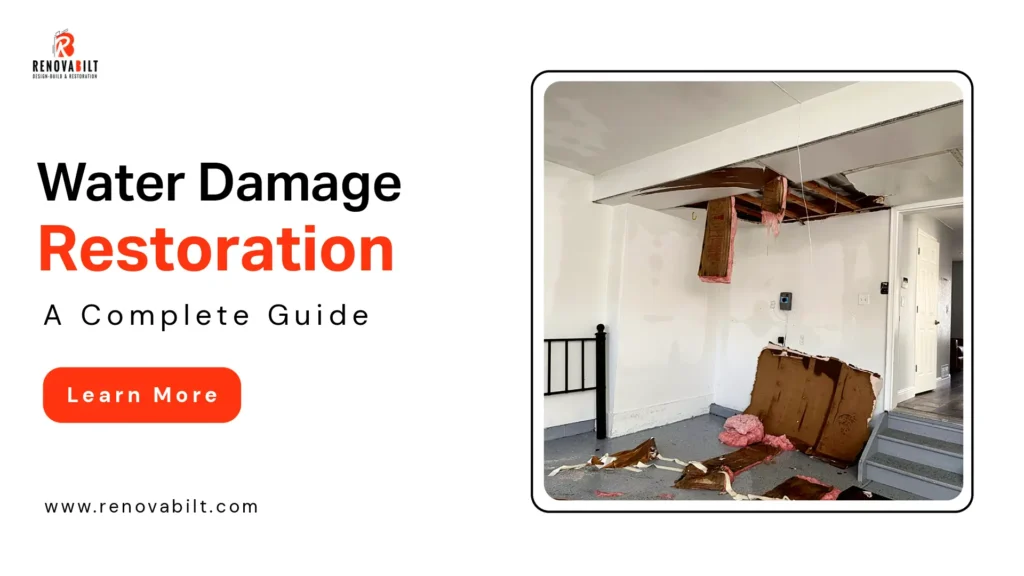
Water damage is one of the most stressful problems a homeowner can face. Whether it’s caused by a burst pipe, flooding, roof leaks, or appliance failure, water can spread fast. It can move through walls, floors, and building materials, often causing hidden damage.
In fact, water damage and freezing account for nearly 30% of all homeowner insurance claims in the United States, making it one of the most common property risks homeowners deal with. Additionally, the average insurance payout for water damage claims is around $11,000, though severe cases can cost much more depending on structural impact and mold growth.
The good news is that with the right approach, water damage repair is possible. Understanding the water damage restoration process helps you act quickly, reduce long-term costs, and protect your home from further problems.
This comprehensive water damage restoration guide explains everything you need to know, from the initial emergency response to the final repairs, in clear, practical language.
What Is Water Damage Restoration?
Water damage restoration is the process of cleaning, drying, repairing, and restoring a property after it has been affected by water intrusion.
The goal is not just to remove visible water but to:
- Prevent structural deterioration
- Stop mold growth
- Restore damaged materials
- Return the property to its pre-loss condition
Professionals use specialized equipment such as industrial pumps, moisture meters, air movers, and dehumidifiers to ensure hidden moisture is fully eliminated.
Restoration is different from simple cleanup. While cleanup focuses on removing water and debris, restoration includes repair from water damage, rebuilding structures, and ensuring the environment is safe for occupancy.
Common Causes of Water Damage
Water damage can happen suddenly or develop slowly over time. Some of the most common causes include:
Plumbing Failures
Burst pipes, leaking supply lines, and broken water heaters are leading causes of residential water damage. Aging plumbing systems significantly increase the risk.
Appliance Malfunctions
Washing machines, dishwashers, refrigerators, and HVAC systems can leak without warning. Appliance-related leaks are responsible for a large percentage of indoor flooding incidents.
Weather and Natural Disasters
Heavy rain, hurricanes, and flooding events can overwhelm drainage systems and cause water intrusion through roofs, windows, and foundations.
Roof Leaks
Damaged shingles or clogged gutters can allow water to seep into ceilings and walls, often causing hidden damage before it becomes visible.
Sewer Backups
This type of water damage is particularly hazardous because it may contain contaminants and bacteria.
According to industry data, even one inch of water inside a home can cause over $25,000 in damage, highlighting how quickly costs escalate when water spreads unchecked.
Understanding Water Damage Categories
Not all water damage is the same. Professionals classify water contamination into three categories, which determine the cleaning and restoration approach.
Category 1: Clean Water
This comes from sanitary sources such as broken pipes or sink overflows.
While initially safe, clean water can quickly degrade into contaminated water if left untreated for more than 24–48 hours.
Category 2: Gray Water
Gray water contains contaminants that may cause illness. Examples include:
- Washing machine discharge
- Dishwasher leaks
- Toilet overflows without waste
This type requires more intensive sanitation procedures.
Category 3: Black Water
Black water is highly contaminated and dangerous. It may include:
- Sewage backups
- Floodwater from rivers or storms
- Standing water with microbial growth
Black water exposure poses serious health risks and always requires professional restoration.
These categories are widely used in the restoration industry to set safety rules and treatment methods.
Why Acting Quickly Matters
Time is the most critical factor in the water damage restoration process.
Water spreads rapidly through porous materials like drywall, insulation, wood, and carpeting. Within hours, damage begins to worsen.
Here’s what typically happens over time:
Within Minutes
- Water spreads throughout the property
- Furniture absorbs moisture
- Paper goods begin to warp
Within Hours
- Drywall starts swelling
- Flooring begins to buckle
- Metal surfaces may start corroding
Within 24–48 Hours
- Mold growth can begin
- Structural materials weaken
- Odors develop
After Several Days
- Severe structural damage may occur
- Mold colonies expand rapidly
- Restoration costs increase dramatically
Studies show mold can start growing within 24 to 48 hours after water exposure, which is why immediate drying is essential.
Quick response reduces:
- Repair costs
- Structural damage
- Health risks
- Insurance complications
Overview of the Water Damage Restoration Steps
While every situation is unique, most restoration projects follow a similar sequence of steps.
The main water damage restoration steps include:
- Emergency contact and inspection
- Water removal and extraction
- Drying and dehumidification
- Cleaning and sanitizing
- Structural repair and restoration
Each phase plays an important role in preventing long-term problems and ensuring the home is safe again.
Professional restoration teams often follow industry standards developed by organizations like the Institute of Inspection Cleaning and Restoration Certification (IICRC), which helps ensure consistent quality and safety practices.
Step 1: Inspection and Damage Assessment
The first step in the water damage restoration process is a detailed inspection.
Professionals evaluate:
- Source of the water
- Contamination level
- Affected materials
- Structural risks
- Moisture levels in hidden areas
They use specialized tools such as:
- Moisture meters
- Infrared cameras
- Hygrometers
These tools help detect water trapped behind walls or under flooring, areas that could otherwise lead to mold or structural deterioration.
Accurate assessment is essential because it determines the entire restoration plan, equipment requirements, and timeline.
Step 2: Water Removal and Extraction
Once the inspection is complete, the next priority is removing standing water.
High-powered pumps and industrial vacuums are used to extract water quickly. The faster the water is removed, the less damage occurs.
Professional extraction equipment can remove thousands of gallons of water efficiently, significantly reducing drying time compared to household tools.
Immediate water removal helps prevent:
- Structural warping
- Mold growth
- Electrical hazards
- Material deterioration
Homes with severe flooding may require multiple extraction phases before drying can begin.
Step 3: Drying and Dehumidification
Even after visible water is removed, moisture remains trapped inside building materials.
This is why drying is one of the most critical water damage restoration steps.
Professionals use:
- Industrial air movers
- Dehumidifiers
- Moisture monitoring equipment
Drying can take anywhere from 24 hours to several days, depending on the severity of damage and humidity conditions.
Proper drying prevents mold growth and protects structural integrity. Skipping or rushing this step often leads to future problems and costly repairs.
Step 4: Cleaning and Sanitizing
After drying is complete, the next phase in the water damage restoration process is cleaning and sanitizing the affected areas.
This step is especially important if the water involves contamination (gray or black water), but even clean water incidents can leave behind bacteria, odors, and residue if materials stay wet for too long.
Professionals typically clean:
- Walls and ceilings
- Flooring and carpets
- Furniture and upholstery
- Personal belongings
- HVAC systems (if affected)
Specialized antimicrobial treatments are often applied to prevent mold growth and eliminate odors.
Air scrubbers with HEPA filtration may also be used to remove airborne particles and improve indoor air quality.
According to restoration industry standards, sanitation is essential not only for comfort but also for health protection, particularly for people with allergies, asthma, or weakened immune systems.
Step 5: Repair and Restoration
The final stage involves repair from water damage, which restores the property to its original condition.
The level of repair depends on the extent of the damage. Minor cases may only require cosmetic fixes, while major incidents could involve structural reconstruction.
Repairs may include:
- Replacing drywall and insulation
- Installing new flooring or carpeting
- Repairing ceilings
- Repainting walls
- Rebuilding damaged structural sections
- Electrical or plumbing repairs
Some homes require partial reconstruction, especially after flooding or prolonged water exposure.
This stage often takes the longest because rebuilding materials and finishes requires precision and coordination between contractors.
How Long Does the Water Damage Restoration Process Take?
One of the most common questions homeowners ask is how long restoration will take.
The timeline varies depending on:
- Amount of water involved
- Type of water contamination
- Size of the affected area
- Materials damaged
- Humidity and environmental conditions
However, general timelines look like this:
Water Extraction
Usually completed within a few hours to one day.
Drying and Dehumidification
The drying process typically takes 3 to 5 days, though severe cases may take longer.
Cleaning and Repairs
It can take anywhere from several days to multiple weeks, depending on the structural damage.
Minor incidents may be fixed within one week. Major floods can take weeks or months to fully restore.
Quick action significantly reduces restoration time and cost.
Cost of Water Damage Restoration
Costs vary widely depending on severity, contamination level, and required repairs.
According to home service industry data:
- Average cost: about $3,000 to $3,500
- Minor damage: around $500 to $1,500
- Moderate damage: $2,000 to $6,000
- Severe structural damage: $10,000+
In extreme cases involving flooding or reconstruction, costs can exceed $25,000 or more.
Several factors influence price:
Type of Water
Black water damage is the most expensive because of sanitation requirements.
Area Size
Larger affected areas require more equipment and labor.
Materials Damaged
Hardwood flooring, drywall, and insulation increase costs.
Mold Growth
Mold remediation adds significant expense.
Emergency Response
After-hours emergency services may increase pricing.
Understanding these cost drivers helps homeowners make informed decisions during the restoration process.
Will Insurance Cover Water Damage?
Insurance coverage depends on the cause of the water damage.
Most homeowner insurance policies cover sudden and accidental water damage, such as:
- Burst pipes
- Appliance failures
- Plumbing leaks
- Storm damage (sometimes)
However, policies usually do not cover:
- Flooding from natural disasters (requires separate flood insurance)
- Gradual leaks due to neglect
- Poor maintenance issues
Because water damage claims are so common, insurance companies carefully evaluate cases.
As mentioned earlier, water damage and freezing represent nearly 30% of all homeowner insurance claims, making documentation extremely important.
Homeowners should:
- Take photos immediately
- Save damaged materials if possible
- Contact insurance quickly
- Keep receipts for repairs and services
Professional restoration companies often assist with insurance documentation to simplify the claims process.
DIY vs Professional Water Damage Restoration
Some minor water incidents can be handled by homeowners, but many situations require professional help.
Here’s how to decide.
DIY May Be Possible If:
- The affected area is small
- Water is clean (Category 1)
- Damage is minimal
- No structural materials are affected
- Drying can occur quickly
Professional Help Is Recommended If:
- Water has soaked the walls or flooring
- There is visible mold
- The source is contaminated
- Structural materials are damaged
- Electrical systems are affected
- Water has been present for more than 24 hours
Professionals have industrial equipment that dries materials much faster than household fans or dehumidifiers.
Improper drying is one of the biggest causes of long-term problems after water damage.
Health Risks Associated With Water Damage
Water damage is not just a structural problem; it can also affect health.
Standing water and moisture create an ideal environment for bacteria and mold growth.
Potential health risks include:
- Respiratory issues
- Allergic reactions
- Skin irritation
- Asthma flare-ups
- Infections from contaminated water
Black water exposure can contain harmful pathogens, making professional cleanup essential.
Mold growth, which can begin within 24 to 48 hours, is one of the biggest concerns following water damage.
How to Prevent Future Water Damage
Prevention is always less expensive than restoration.
Here are practical ways homeowners can reduce risk:
Regular Plumbing Inspections
Check pipes, hoses, and connections for leaks or corrosion.
Maintain Appliances
Replace washing machine hoses every 5 years and monitor water heaters.
Clean Gutters and Downspouts
Proper drainage prevents roof and foundation leaks.
Install Water Leak Detectors
Smart leak sensors can alert homeowners before damage becomes severe.
Monitor Humidity Levels
Indoor humidity should ideally stay between 30% and 50%.
Inspect Roofing Annually
Early detection prevents major interior damage.
Preventive maintenance significantly reduces the likelihood of expensive restoration projects.
Signs You May Have Hidden Water Damage
Not all water damage is obvious. Some warning signs include:
- Musty odors
- Peeling paint or wallpaper
- Warped flooring
- Stains on ceilings or walls
- Increased utility bills
- Mold spots
- Soft drywall
Early detection allows faster intervention and lower repair costs.
Final Thoughts
Water damage can feel stressful and unpredictable, but with the right team and a clear restoration plan, recovery becomes much more manageable. At RenovaBilt, we believe homeowners deserve both expert guidance and reliable solutions when facing water-related emergencies.
From emergency water removal to final repairs, each step plays a critical role in protecting your home and preventing long-term problems.
The key takeaways from this water damage restoration guide are simple:
- Act quickly
- Dry thoroughly
- Sanitize properly
- Repair completely
- Prevent future damage and issues
Whether you’re dealing with a small leak or major flooding, the right approach can save thousands of dollars and restore your home safely. If you need expert help, RenovaBilt offers a comprehensive Water Damage Restoration Service designed to handle everything from emergency response to full property recovery.
FAQs
The first step is inspection and assessment to determine the source, severity, and contamination level of the water.
Immediately. Mold can begin growing within 24–48 hours, and structural damage worsens over time.
Yes. With proper restoration and repair from water damage, most homes can be returned to their pre-damage condition.
Sometimes. If drywall has absorbed significant moisture or contamination, replacement is often necessary.
They use moisture meters, infrared cameras, and humidity sensors to locate trapped water inside materials.