
A house fire can change everything in minutes. Even after the flames are out, smoke, soot, water from firefighting efforts, and hidden structural damage can continue affecting your property. One of the first questions most homeowners ask is, “How long will it take to restore my home?”
The answer depends on a number of factors, including the size of the fire, the amount of damage, and the speed at which restoration begins. Some homes can be rebuilt in weeks; others will take months.
This guide explains the typical fire restoration timeline, the fire restoration steps, what happens during fire and smoke damage repair, and what fire damage restoration is so you know what to expect from start to finish.
Fire Restoration Steps: What Actually Happens After a Fire
You may be eager to get back to your home, but understanding the steps involved in fire restoration helps you to appreciate why the process cannot be rushed. Each stage protects the next one, and skipping ahead usually costs you more time later on. Here’s the typical fire restoration timeline stage by stage:
1. Emergency Response (Day 0–1)
The clock starts the moment the fire department clears the scene. A licensed restoration company should be able to respond within a few hours, any time of day, because soot and acidic residue keep damaging surfaces the longer they sit untreated. This first visit typically includes shutting off compromised utilities, confirming the property is structurally safe to enter, and mobilizing equipment and crews for the days ahead.
2. Inspection and Assessment (Day 1–3)
A detailed inspection determines the scope of the fire and smoke damage repair needed. Technicians check structural framing, electrical systems, HVAC ductwork, and every affected surface for soot penetration. This is also when the restoration company should test air quality and identify what’s salvageable versus what needs replacement. The findings from this stage shape the entire fire restoration timeline that follows, since hidden damage behind walls or under flooring often changes the original estimate.
3. Board-Up and Roof Tarping (Day 1–2)
Broken windows, damaged doors, and compromised roof sections need to be secured right away to keep out weather, animals, and unauthorized entry. This step usually happens alongside the initial inspection, since an open, exposed structure puts everything else at risk of further damage before restoration even begins.
4. Water Removal and Drying (3–7 Days)
Firefighting almost always leaves behind significant water damage, even in a small fire. Standing water needs to be extracted immediately, and industrial dehumidifiers and air movers run for several days to bring moisture levels back to normal. Skipping or rushing this step is one of the most common causes of mold growth showing up weeks later.
5. Smoke and Soot Cleanup (3–10 Days)
This is often the most labor-intensive phase. Crews clean soot from walls, ceilings, ductwork, and personal belongings using specialized techniques matched to the surface and the type of fire (protein fires, synthetic fires, and natural material fires each leave different residues that respond to different cleaning methods). HVAC systems get cleaned or replaced, since soot circulating through ductwork can re-contaminate a clean room within hours.
6. Odor Removal (Several Days to Two Weeks)
Smoke odor is molecular, meaning it settles into porous materials like drywall, insulation, carpet padding, and even wood framing. Odor removal usually involves a combination of thermal fogging, ozone or hydroxyl treatment, and sealing products applied to framing and subfloor. Severe smoke odor cases can run closer to two weeks of dedicated treatment before the smell is fully gone, and in some cases porous materials need to be removed and replaced rather than treated.
7. Structural Cleaning (1–2 Weeks)
Once surfaces are dry and soot has been removed, framing, subfloor, and other structural components go through a deeper cleaning and sanitizing pass. This step protects against corrosion from acidic soot residue and prepares the structure for reconstruction. Salvageable contents, from furniture to documents to electronics, are typically cleaned off-site during this same window.
8. Repairs and Reconstruction (Several Weeks to Several Months)
This final phase covers everything from drywall and paint to full structural rebuilds. A single room with drywall and paint repairs might take a few weeks. A house that lost a roof, load-bearing walls, or an entire floor can take several months, particularly if permits, structural engineering reviews, or custom materials are involved. This stage is almost always the longest part of the overall fire restoration timeline, especially for large-loss fires.
Typical Fire Restoration Timeline
Every project is unique, but most restoration jobs follow a similar sequence.
| Restoration Stage | Typical Timeline |
| Emergency response | Day 0–1 |
| Inspection and assessment | Day 1–3 |
| Board-up and roof tarping | Day 1–2 |
| Water removal and drying | 3–7 days |
| Smoke and soot cleanup | 3–10 days |
| Odor removal | Several days to two weeks |
| Structural cleaning | 1–2 weeks |
| Repairs and reconstruction | Several weeks to several months |
A small kitchen fire may take only two to four weeks from cleanup to completion. A major structural fire may require several months.
What Is Fire Damage Restoration, and How Is It Different From Repair?
Fire damage restoration is the full process of returning a property to its pre-fire condition, and it’s broader than “repair” alone. Repair usually refers to rebuilding damaged structure, like drywall, framing, or flooring. Restoration includes repair, but also covers water extraction, soot and residue cleaning, smoke odor elimination, contents cleaning, and sanitizing the property so it’s safe to live in again. A qualified fire and smoke damage repair company follows IICRC guidelines throughout the process, since fire damage involves health and safety risks that go beyond visible destruction, including soot particulates, corrosive residue, and compromised air quality.
Factors That Change the Fire Restoration Timeline
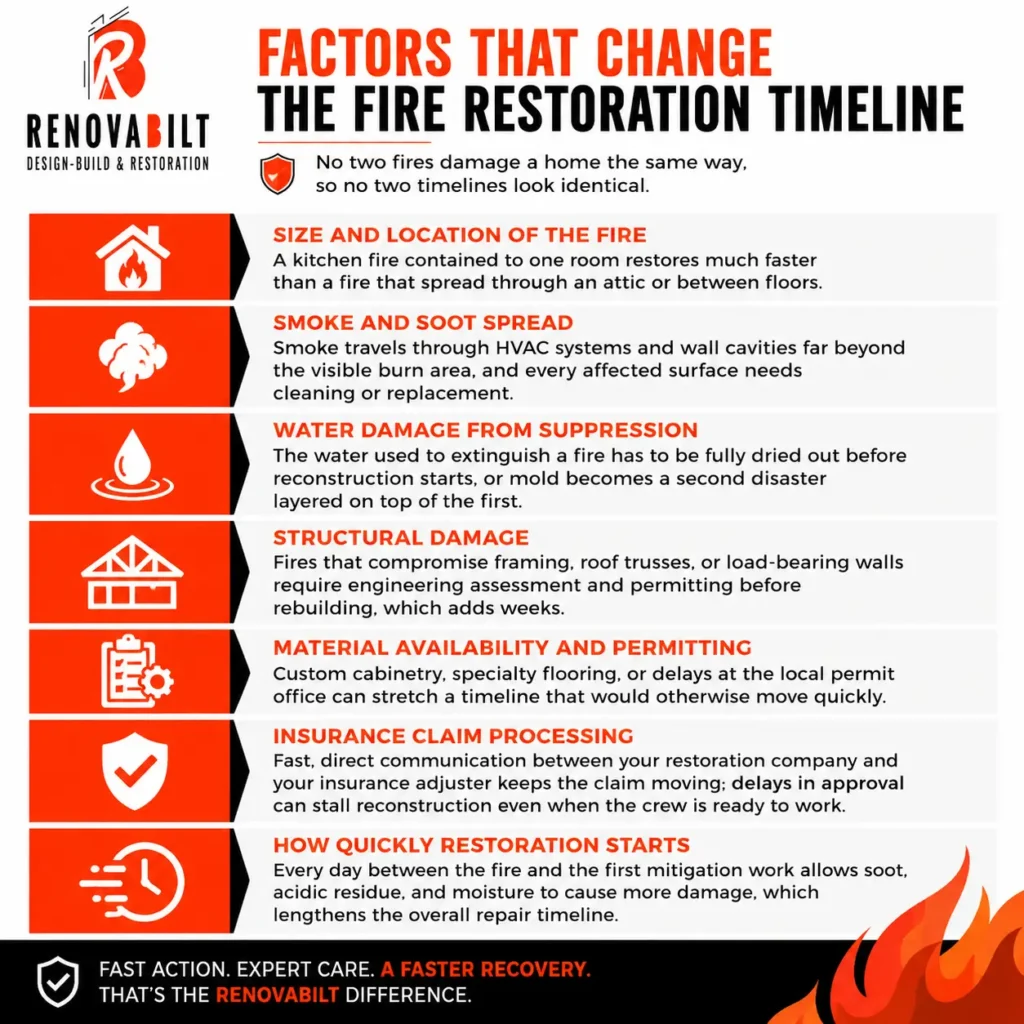
No two fires damage a home the same way, so no two timelines look identical. The variables that matter most:
- Size and location of the fire. A kitchen fire contained to one room restores much faster than a fire that spread through an attic or between floors.
- Smoke and soot spread. Smoke travels through HVAC systems and wall cavities far beyond the visible burn area, and every affected surface needs cleaning or replacement.
- Water damage from suppression. The water used to extinguish a fire has to be fully dried out before reconstruction starts, or mold becomes a second disaster layered on top of the first.
- Structural damage. Fires that compromise framing, roof trusses, or load-bearing walls require engineering assessment and permitting before rebuilding, which adds weeks.
- Material availability and permitting. Custom cabinetry, specialty flooring, or delays at the local permit office can stretch a timeline that would otherwise move quickly.
- Insurance claim processing. Fast, direct communication between your restoration company and your insurance adjuster keeps the claim moving; delays in approval can stall reconstruction even when the crew is ready to work.
- How quickly restoration starts. Every day between the fire and the first mitigation work allows soot, acidic residue, and moisture to cause more damage, which lengthens the overall repair timeline.
Why Working With an Experienced Restoration Company Matters
RenovaBilt Construction & Restoration has been restoring fire and smoke-damaged homes and businesses in the Denver and Aurora area for over 10 years, and it shows most in the moments that determine the length of a project. Our technicians are IICRC certified and adhere to industry-standard protocols for fire, smoke, and water damage so that there is no guesswork in your restoration.
A few things set RenovaBilt apart during a fire restoration project:
- 24/7 emergency response, because the first hours after a fire determine how much secondary damage occurs
- Direct insurance billing, so you’re not stuck managing paperwork or fronting costs while your claim is processed
- One company, one contract, start to finish — unlike franchise models where mitigation, contents, and reconstruction are handled by different crews or subcontractors, RenovaBilt manages the entire fire restoration timeline under a single point of contact
- Local knowledge of Denver and Aurora, including familiarity with local permitting offices and building codes that affect reconstruction timelines
Working with a single, accountable team typically shortens the overall timeline, since there’s no handoff delay between mitigation, cleaning, and reconstruction crews.
If you are in need of Fire and Smoke Damage Restoration in Aurora or Denver, RenovaBilt is available 24/7 at 720-499-8693 for an immediate assessment and a clear timeline for your specific situation.
Final Thoughts
Facing the aftermath of a fire can be intimidating, but understanding the fire restoration timeline can help you set realistic expectations.
Each project is unique, but most projects follow the same flow, from emergency response and damage assessment to smoke cleanup, structural repairs, and final reconstruction. Quick action after the fire is out can reduce secondary damage, improve the success of restoration efforts, and get you back into your home sooner.
Whether the fire is large or small, a small fire in the kitchen or severe structural damage, working with experienced professionals will ensure that every step of the fire restoration process is done safely and thoroughly.
If you’re looking for a broader overview of the restoration process, insurance considerations, and prevention tips, be sure to read our Fire Damage Restoration: The Complete Guide.
Frequently Asked Questions
What impacts the fire damage restoration timeline?
The biggest factors are the size of the fire, how far smoke and soot spread, how much water damage occurred during firefighting, whether structural repairs are needed, material and permit availability, and how quickly restoration work begins after the fire is extinguished. Fires with structural damage or extensive smoke penetration take considerably longer than contained, single-room fires.
How much does fire restoration cost per square foot?
Fire and smoke damage repair costs vary widely because every fire is different, but homeowners can generally expect a range depending on the severity of smoke, soot, and structural damage, with light smoke damage costing far less per square foot than fires involving structural rebuilding. Because pricing depends heavily on the specifics of your property, the most accurate number comes from an in-person inspection and a written estimate. Most reputable restoration companies, including RenovaBilt, also work directly with your insurance company to determine covered costs.
How soon can restoration work begin after the fire is extinguished?
Mitigation work, such as board-up, tarping, and water extraction, should begin within hours of the fire department clearing the scene. Starting quickly limits secondary damage from lingering moisture and acidic soot residue, which is why 24/7 emergency response matters so much in the first 24 to 48 hours.
When is it safe to re-enter a property after fire restoration?
A property is safe to re-enter once air quality testing confirms soot particulates and combustion byproducts are within safe levels, structural repairs are complete, and any lingering odor has been treated. A restoration professional should confirm this with testing rather than relying on visual inspection alone, since smoke residue and air contamination aren’t always visible to the eye.
How long does it take to remove smoke odor completely?
Light smoke odor can often be resolved within a few days using thermal fogging and air scrubbing. Moderate to severe smoke odor, especially odor that has settled into drywall, insulation, or wood framing, typically takes two to four weeks of treatment, and in some cases affected porous materials need to be removed and replaced rather than deodorized, since odor trapped deep in a material can’t always be fully treated on-site.