
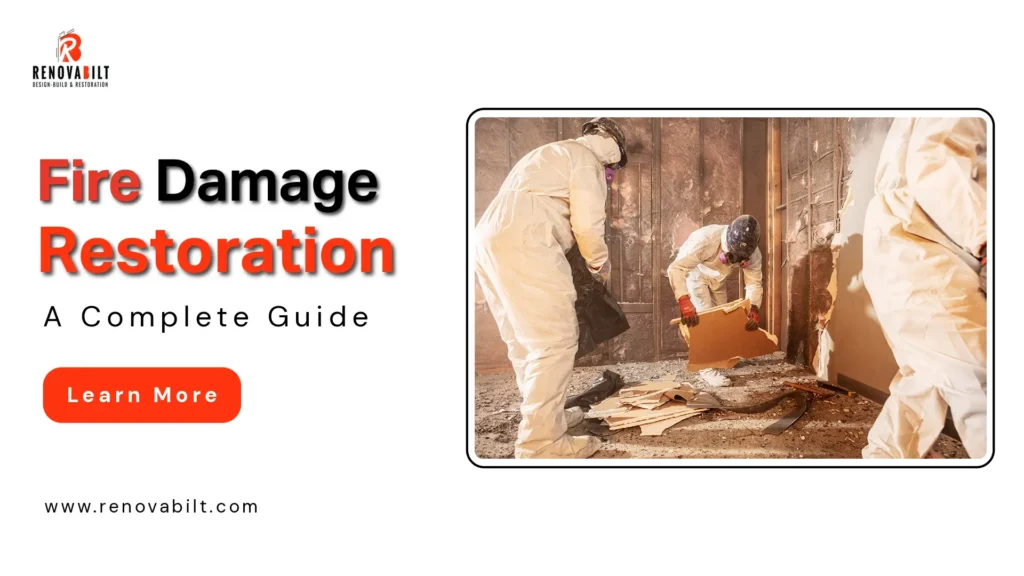
A house fire is one of the most traumatic events any property owner can go through. Once the fire department leaves and the immediate danger is over, the silence can feel overwhelming. You are left standing in a space filled with charred surfaces, the strong smell of smoke, and water soaking into floors and walls, wondering what to do next. That is exactly where a clear Fire Damage Restoration Guide becomes essential, because it helps you understand the steps needed to recover and move forward with confidence.
How to Repair a Fire-Damaged House?
Repairing a fire-damaged house starts with a professional damage assessment, followed by securing the property with board-ups and tarps. Next comes water extraction, debris removal, and soot cleaning. Structural repairs and deodorization follow before final reconstruction restores the home to pre-loss condition. Acting within the first 24–48 hours is critical to prevent secondary damage from mold and corrosion.
At first glance, the damage may seem beyond repair. Burnt materials, soot stains, and moisture from firefighting efforts can make the situation look hopeless. But the reality is very different. With the right professional fire damage restoration service, many properties that appear to be total losses can actually be restored to a safe and livable condition.
In this guide, we will walk you through the basics of fire damage restoration, explain what fire damage restoration involves, and share the practical guidelines that restoration professionals at RenovaBilt use every day to bring homes and businesses back to life.
The Reality of Fire Damage: By the Numbers
Before we get into the “how-to,” let’s look at the “why.” Fire damage is more than just a local tragedy; it is a national epidemic of property loss.
According to the National Fire Protection Association (NFPA), fire departments in the United States respond to a fire every 24 seconds. That is a staggering frequency. Even more sobering is the financial impact: direct property damage from fires totals more than $25.5 billion annually.
For the individual homeowner, the costs are equally high. While a small kitchen fire might cost a few thousand dollars to clean up, the national average for fire damage restoration is approximately $27,000. If the fire causes structural damage or involves a large-scale commercial property, those costs can easily exceed $100,000.
These aren’t just numbers on a page; they represent the scale of the challenge restoration professionals face when they arrive at a scene.
Fire Damage Restoration: The Basics
When people think of fire damage, they think of flames. However, restoration professionals look at a fire through a much wider lens. In the industry, fire damage restoration involves three distinct types of damage:
1. Thermal Damage (The Fire Itself)
This is the visible charring and consumption of materials. Wood burns, plastics melt, and steel can warp. At temperatures exceeding 1,100°F, even the structural integrity of a building’s frame begins to fail.
2. Smoke and Soot (The Silent Destroyer)
Smoke is a chemical soup. Depending on what is burned (plastics, wood, proteins, or synthetic fabrics), the soot left behind can be oily, dry, or highly acidic. Within hours, acidic soot begins to corrode metal fixtures, etch glass, and permanently stain porous surfaces like marble or granite.
3. Water and Chemical Damage (The Aftermath)
Ironically, the very things used to save the building often cause the most damage. Thousands of gallons of water from fire hoses can lead to mold growth in as little as 24 to 48 hours. Additionally, fire suppressants and foams leave behind chemical residues that must be neutralized during the fire remediation process.
The Professional Fire Damage Restoration Process: A Step-by-Step Breakdown
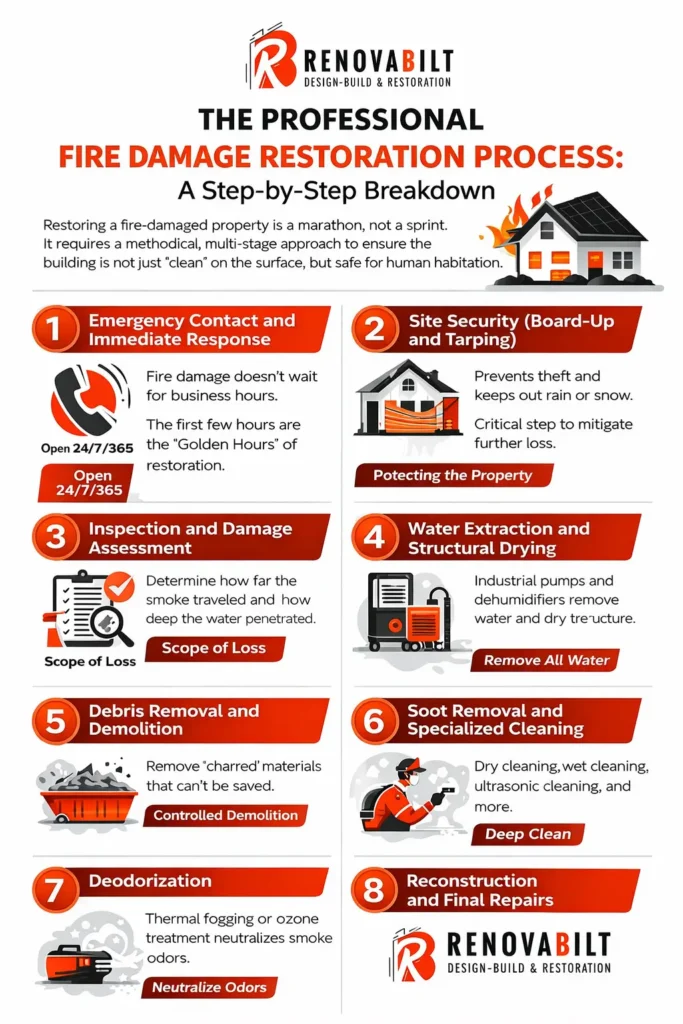
Restoring a fire-damaged property is a marathon, not a sprint. It requires a methodical, multi-stage approach to ensure the building is not just “clean” on the surface, but safe for human habitation. So, here is what fire damage restoration involves:
Step 1: Emergency Contact and Immediate Response
Fire damage doesn’t wait for business hours. Most reputable restoration companies operate 24/7/365. The first few hours are known as the “Golden Hours” of restoration. Immediate stabilization can save tens of thousands of dollars in secondary damage.
Step 2: Inspection and Damage Assessment
Once the fire marshal clears the site, restoration experts perform a “Scope of Loss.” Using tools like thermal imaging cameras and moisture meters, they look behind the walls.
- The Goal: Determine how far the smoke traveled and how deep the water penetrated.
- The Result: A detailed document (often created using industry-standard software like Xactimate) that outlines every repair needed for the insurance company.
Step 3: Site Security (Board-Up and Tarping)
A fire often leaves a building “open” to the elements. Windows are broken, and roofs may have holes. Professional crews perform an emergency board-up to prevent theft and keep out rain or snow. This is a critical step in the fire damage restoration process because insurers often require homeowners to “mitigate further loss.”
Step 4: Water Extraction and Structural Drying
If there is standing water, it has to go, now. Industrial-grade submersible pumps and truck-mounted extractors remove the bulk of the water. Then, high-speed air movers and LGR (Low Grain Refrigerant) dehumidifiers are used to pull moisture out of the studs and subflooring.
Step 5: Debris Removal and Demolition
Not everything can be saved. Materials that are “charred” (where the structural integrity is gone) must be removed. This is often called controlled demolition. By removing the most heavily damaged items first, the team reduces the source of the smoke odor.
Step 6: Soot Removal and Specialized Cleaning
This is the most labor-intensive part of the fire remediation process. Every inch of the affected area, ceilings, walls, floors, and ducts, must be cleaned.
- Dry Cleaning Sponges: Used for light, powdery soot.
- Wet Cleaning: Used for heavy, oily soot residues.
- Ultrasonic Cleaning: A high-tech method for restoring delicate items like electronics or jewelry.
Step 7: Deodorization
The smell of a fire isn’t just “in the air”; it’s embedded in the pores of the building materials. Pros use Thermal Fogging or Ozone Treatment to chemically break down the odor-causing molecules. These aren’t just air fresheners; they are molecular-level neutralizers.
Step 8: Reconstruction and Final Repairs
The final phase is the “build-back.” This includes hanging new drywall, painting, installing flooring, and potentially replacing the roof. The goal of the fire damage restoration process is to return the property to “pre-loss condition”, meaning it should look as if the fire never happened.
Understanding Fire Damage Restoration Guidelines (The IICRC Standards)
How do you know if a restoration company is doing a good job? They should be following the fire damage restoration guidelines set by the IICRC (Institute of Inspection, Cleaning and Restoration Certification).
The primary standard for fire restoration is the IICRC S700. This document provides a scientific framework for:
- Safety and Health: Ensuring the workers and occupants are protected from toxic ash and char.
- Contaminant Removal: Specifying exactly how soot and smoke must be removed from different surfaces.
- Documentation: Requiring a transparent paper trail for the insurance company.
When a contractor follows these guidelines, they aren’t just “cleaning up”; they are performing a forensic restoration that protects the long-term value of your home.
The Hidden Hazards: Why DIY is Dangerous
It can be tempting to grab a bucket and a sponge and start cleaning yourself. However, the fire remediation process involves hazards that aren’t visible to the naked eye.
1. Toxic Residues and VOCs
Modern homes are filled with plastics and synthetic materials. When these burn, they release dioxins, PAHs (polycyclic aromatic hydrocarbons), and heavy metals. They also produce volatile organic compounds (VOCs) — invisible chemicals that absorb into walls, flooring, and ductwork and can continue off-gassing for weeks after the fire. Breathing these in, even days after the fire, can lead to serious respiratory issues and long-term health risks. Learn more about what VOCs from a house fire are and whether they’re still in the air after cleanup.
2. Structural Integrity
Heat can weaken wooden support beams and warp steel without leaving obvious burn marks. A professional knows how to spot “deflection” in a structure that an untrained eye might miss.
3. Hidden Mold
If you clean the soot but don’t address the moisture trapped behind the baseboards, you will have a massive mold problem within a week. Professionals use moisture mapping to ensure every pocket of humidity is gone.
Fire Damage and Your Insurance Claim
One of the most complex parts of the fire damage restoration process isn’t the cleaning, it’s the paperwork.
As noted by experts at RenovaBilt, your restoration contractor and your insurance company will often have different views on what “pre-loss condition” looks like. The insurance company’s goal is to settle the claim for the lowest possible amount. Your goal is to get your home back.
The Power of Documentation
Every step of the fire remediation process must be documented with:
- High-resolution photos (before, during, and after).
- Detailed line-item estimates using industry-standard pricing.
- Technical reports explaining why a certain material couldn’t be cleaned and had to be replaced.
If your contractor uses Xactimate (the same software the adjusters use), it creates a common language that makes it much harder for the insurance company to deny a necessary repair.
What Can Be Salvaged? (Contents Restoration)
A common myth is that if an item was in a fire-damaged room, it’s trash. In reality, modern fire damage restoration includes advanced techniques to save your belongings:
- Soft Goods: Clothes, curtains, and linens can often be saved using specialized “Esporta” wash systems that remove 99% of soot and odors.
- Electronics: As long as the plastic housing hasn’t melted, circuit boards can often be cleaned using deionized water and specialized drying chambers.
- Documents and Photos: Vacuum freeze-drying can save wet or smoke-damaged paper, preventing it from crumbling or molding.
- Hard Goods: Furniture and jewelry are usually the easiest to restore through hand-cleaning and ultrasonic baths.
How to Choose a Restoration Contractor
When you are in the middle of a crisis, you are vulnerable. Don’t hire the first “storm chaser” who knocks on your door. Look for these four things:
- IICRC Certification: Ensure they follow the fire damage restoration guidelines.
- State Licensing and Insurance: They should be licensed as a general contractor and carry specific environmental insurance.
- Local References: A company with a physical office in your area is more likely to stand by its work.
- Full-Service Capabilities: You want a company that can handle both the remediation (cleaning) and the reconstruction (rebuilding).
Final Thoughts: The Road to Recovery
Recovering from a fire is as much a mental journey as it is a physical one. The fire damage restoration process is designed to take the burden off your shoulders.
Remember these three takeaways:
- Speed is everything. The longer the soot sits, the more permanent the damage becomes.
- Safety first. Never enter a fire-damaged building until the authorities have cleared it.
- Hire pros. From managing the fire remediation process to negotiating with your insurance company, having certified experts on your side is the only way to ensure your home is truly safe again.
A fire is a full stop in the story of your home, but the restoration process is the start of the next chapter. By following the right fire damage restoration guidelines and acting quickly, you can turn a tragedy back into a sanctuary. If you are dealing with fire damage right now and need expert help, professional support for Fire Damage Restoration in Denver can make the recovery process faster, safer, and far less overwhelming.
FAQ: Common Questions About Fire Restoration
It depends on the severity. A small kitchen fire might take 5–10 days. A whole-house restoration involving structural repairs can take 3–6 months.
If the fire was contained to one room and there are no structural or air quality issues, you might be able to stay. However, most professionals recommend vacating during the “deodorization” phase due to the chemicals and equipment involved.
Yes. If the fire remediation process is done correctly, meaning all charred material is removed, and the HVAC system is cleaned, the smell will be completely neutralized.
In almost all cases, yes. Standard homeowners’ policies cover fire, smoke, and water damage caused by firefighting efforts. However, you must prove the “extent” of the loss, which is why professional documentation is vital.
Fire damage restoration is the process of cleaning, repairing, and restoring a property after a fire, including removing soot, smoke residue, and damaged materials. It also involves deodorizing affected areas and repairing structural damage to return the property to a safe, usable condition.