
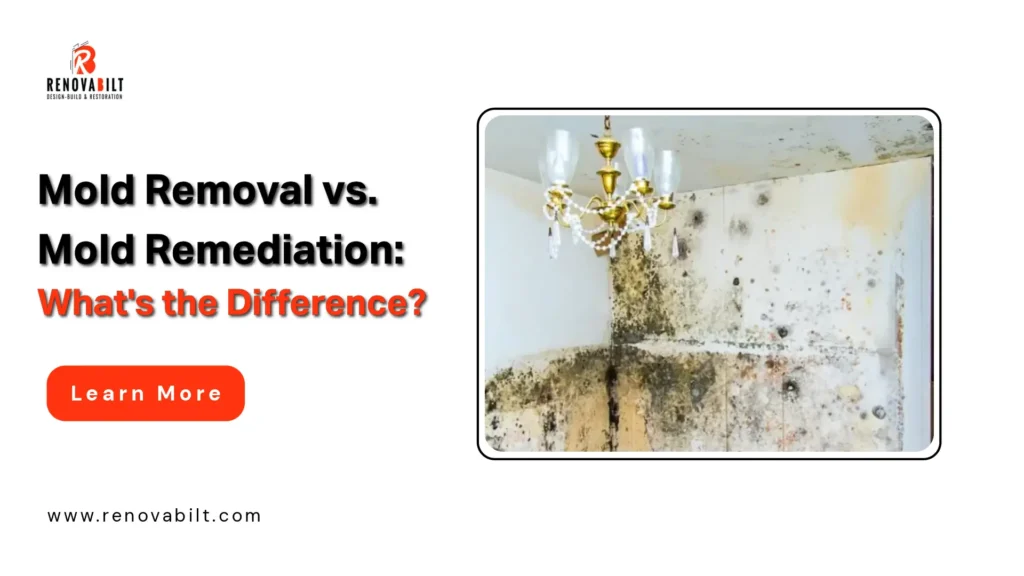
Mold removal means physically wiping, scrubbing, or discarding materials that have visible mold on them. Mold remediation is the broader, more thorough process: it finds and fixes the moisture source, contains the affected area, removes contaminated materials, treats surfaces, and verifies the air and surfaces are safe afterward. In short, removal cleans what you can see. Remediation makes sure the mold doesn’t come back.
Why This Distinction Actually Matters
If you’ve searched for help with a mold problem, you’ve probably seen both terms used almost interchangeably. Some companies advertise “mold removal services,” others call it “mold remediation,” and a few use both terms on the same page. That’s confusing, and honestly, it’s part of why so many homeowners in the Denver and Aurora area end up paying twice: once for a quick cleanup, and again a few months later when the mold reappears somewhere else in the same house.
The difference between mold removal and mold remediation isn’t just marketing language. It reflects two genuinely different levels of work, two different price points, and two very different outcomes. Understanding which one you actually need before you hire someone can save you thousands of dollars and a lot of frustration.
What Is Mold Removal?
Mold removal is the physical act of getting rid of mold you can see. This usually involves:
- Scrubbing mold off hard, non-porous surfaces like tile, glass, or countertops
- Using detergent, water, or a mold-specific cleaner
- Discarding small porous items that have mold on them, like a shower curtain or a moldy piece of cardboard
- Wiping down the surrounding area
The Environmental Protection Agency (EPA) actually recommends this approach for small mold patches. If the affected area is less than about 10 square feet, roughly a 3-foot by 3-foot patch, a homeowner can often handle it with detergent, water, gloves, an N-95 respirator, and some patience.
That’s the key limitation of mold removal on its own: it works for small, isolated, surface-level mold. It does not address why the mold showed up in the first place, and it does nothing for mold that has worked its way into porous materials like drywall, insulation, or wood framing.
What Is Mold Remediation?
Mold remediation is a structured, standards-based process. Professional remediation companies, including RenovaBilt, follow the ANSI/IICRC S520 Standard for Professional Mold Remediation, which is the industry’s recognized framework for how mold-damaged structures should be assessed and treated. This standard was most recently updated in 2024 and lays out procedures for everything from initial inspection to final verification.
A full mold remediation project typically includes:
- Inspection and assessment. A trained technician identifies the extent of the contamination, the moisture source, and whether hidden mold exists behind walls, under flooring, or in crawl spaces.
- Containment. Plastic sheeting and negative air pressure equipment isolate the affected area so mold spores don’t spread to unaffected parts of the home during the work.
- Air filtration. HEPA air scrubbers capture airborne mold spores throughout the process.
- Source removal. Contaminated porous materials, drywall, insulation, carpet, sometimes framing, are removed and disposed of properly. Non-porous and semi-porous materials that can be effectively cleaned are treated instead of replaced.
- Cleaning and antimicrobial treatment. Remaining surfaces are cleaned and treated with EPA-registered antimicrobial products to inhibit regrowth.
- Drying. Industrial dehumidifiers and air movers bring moisture levels back to normal, since mold cannot regrow without a moisture source.
- Post-remediation verification. A final inspection, and sometimes third-party air quality testing, confirms the space meets acceptable standards before the area is cleared for reconstruction.
- Repair and reconstruction. Any drywall, flooring, or framing that was removed gets rebuilt, so the space is fully restored, not just cleaned.
That last step is worth calling out. A big part of what separates remediation from simple removal is that remediation companies typically handle the mold damage repair services side of the job too, meaning you don’t need to hire a second contractor to replace drywall or repaint once the mold itself is gone.
Mold Removal vs. Mold Remediation: Side by Side
| Factor | Mold Removal | Mold Remediation |
| Scope | Surface-level cleaning | Full inspection, containment, removal, treatment, and repair |
| Best for | Small, isolated patches under 10 sq ft | Larger infestations, hidden mold, recurring mold, health concerns |
| Addresses root cause | No | Yes; moisture source is identified and corrected |
| Follows industry standards | Not typically | Follows the ANSI/IICRC S520 Standard |
| Includes repairs | No | Often yes, as part of the full project |
| Long-term result | Mold may return if moisture issue persists | Mold is far less likely to return |
Mold Extraction vs. Mold Remediation
“Mold extraction” is a term some companies use to describe the physical process of removing mold-contaminated materials, pulling out moldy drywall or insulation, for example. It’s really a subset of remediation, not a separate service. Extraction is one step (source removal) within the larger remediation process. If a company advertises “mold extraction” as a standalone service, ask whether it includes containment, air filtration, and post-work verification. If it doesn’t, you’re likely getting a partial fix.
Mold Cleanup vs. Mold Remediation
“Mold cleanup” is often used the same way as “mold removal”; it implies surface cleaning without the structured process behind it. Cleanup can be a reasonable DIY step for small, dry, hard-surface mold spots. But cleanup alone won’t tell you whether mold is growing behind a wall or under a subfloor, and it won’t fix the humidity or leak that caused it. Think of cleanup as the visible, surface-only version of remediation’s much deeper process.
Mold Treatment vs. Mold Remediation
“Mold treatment” usually refers to applying an antimicrobial, fungicide, or sealant to a surface after mold has been physically removed. Treatment is a real and necessary step, but it’s just one piece of the remediation puzzle. Applying treatment to a surface without first correcting the moisture problem is like repainting over a stain that’s still wet. It might look better for a while, but the underlying issue is still there, and the mold usually comes back.
How Do You Know Which One You Need?
A few signs point toward needing full remediation rather than a simple cleanup:
- The affected area is larger than roughly 10 square feet
- You can smell a persistent musty odor even where you don’t see visible mold
- The mold followed a water damage event, a leaking pipe, roof leak, flooding, or appliance failure
- You’ve cleaned mold before in the same spot, and it came back
- Anyone in the household has ongoing respiratory symptoms, allergy flare-ups, or headaches that improve when they’re away from home
- The mold is in a crawl space, basement, or behind a wall where you can’t fully assess it yourself
If any of these apply, it’s worth having a professional mold removal service with remediation capabilities inspect the property before you spend time and money on DIY cleaning that may not solve the underlying problem.
FAQs
Is mold remediation necessary after removal?
Often, yes. If the mold covered a large area, followed by water damage, or has returned after previous cleaning, removal alone hasn’t addressed the moisture source that caused it. Remediation identifies and corrects that source, which is the only way to reliably prevent regrowth.
Do homeowners insurance policies cover mold remediation?
It depends on the cause. Most standard homeowners policies cover mold remediation only when the mold resulted from a sudden, accidental covered event, such as a burst pipe or an appliance malfunction. Mold caused by long-term leaks, chronic humidity, or deferred maintenance is typically excluded. Some insurers offer mold endorsements or riders that add limited coverage, often with a dollar cap. It’s worth reviewing your specific policy language, and a restoration company experienced in insurance claims can help you understand what documentation your insurer will need.
How much does mold remediation cost compared to simple mold removal?
Simple mold removal for a small, visible patch can sometimes be handled with basic cleaning supplies at little to no cost. Full mold remediation costs more because it includes containment, HEPA air filtration, professional-grade antimicrobial treatment, moisture correction, and often repair and reconstruction. The exact cost depends on the size of the affected area, how many rooms are involved, and whether materials need to be replaced. A property-specific inspection is the only reliable way to get an accurate estimate.
Is mold removal part of remediation?
Yes. Mold removal, sometimes called source removal, is one step within the larger remediation process. Remediation includes removal but adds inspection, containment, air filtration, antimicrobial treatment, drying, verification, and repair around it.
The RenovaBilt Difference
Choosing between a quick cleanup and full remediation isn’t a decision you should have to make blind. RenovaBilt Construction & Restoration has served Denver and Aurora for more than 10 years, and our technicians are IICRC-certified in mold remediation, meaning our process follows the same ANSI/IICRC S520 Standard referenced throughout this article. We carry advanced containment and HEPA filtration equipment on every mold job, and we handle the repair and reconstruction side of the work too, so you’re not left coordinating multiple contractors after the mold is gone.
Because mold problems often follow a water damage event, we also work directly with homeowners insurance companies to help document the cause of loss and navigate the claims process. And because mold doesn’t wait for business hours, our team is available 24/7 for emergency inspections and remediation services.
If you’re dealing with a mold issue anywhere in the Denver or Aurora area and you’re not sure whether you need a simple cleanup or full mold remediation services, we’re happy to take a look and give you an honest assessment, not an upsell.
Want the complete step-by-step breakdown of the remediation process, testing, and prevention? Read our full Mold Remediation Guide.
Get a Free Quote today, or call us anytime at 720-499-8693.