
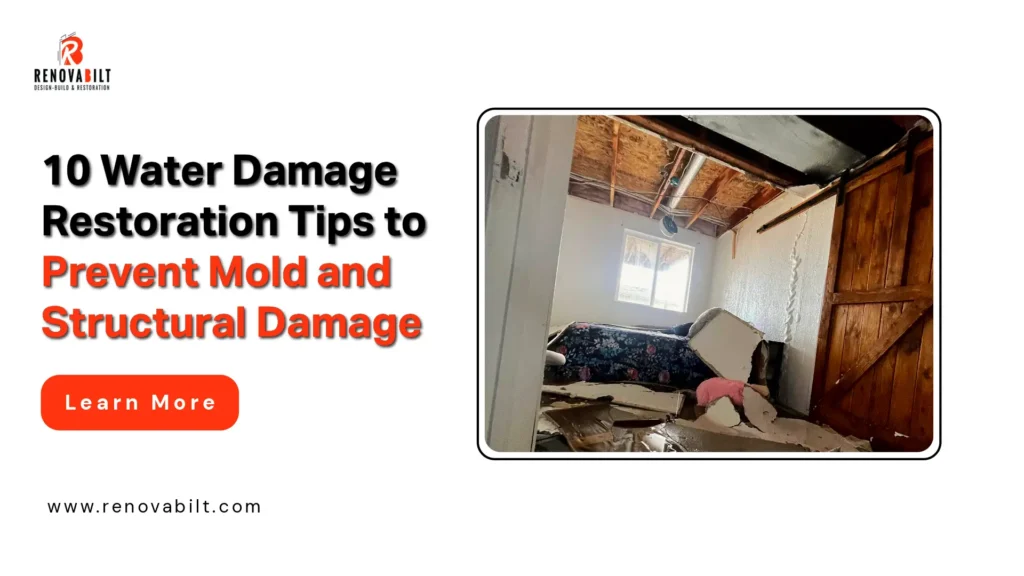
The most important water damage restoration tips are: shut off the water source immediately, cut power to affected areas, remove standing water within hours (not days), and dry the space fully using fans, dehumidifiers, and moisture meters. Mold can begin growing in just 24-48 hours, so fast action limits structural damage and keeps repair costs down. Severe or contaminated water always calls for a certified professional.
Water damage rarely waits for a convenient time. A burst pipe at 2 a.m., a sump pump failure during spring runoff, or a slow leak behind the dishwasher can all turn into a costly mess fast. The good news: knowing the right water damage restoration tips can mean the difference between a quick clean-up and a months-long repair bill. Here’s what to do the moment you spot standing water, plus how to keep mold and structural damage from creeping in behind the scenes.
1. Shut Off the Water Source First
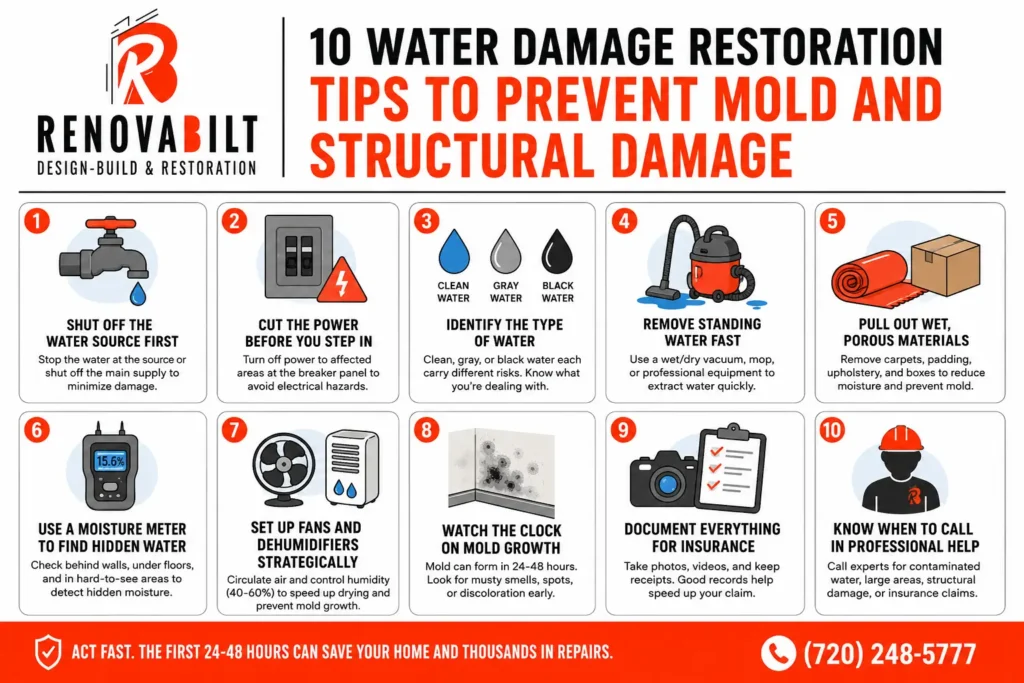
Before you grab a single towel, find out where the water is coming from and stop it. If it’s a burst supply line or an overflowing appliance, shut off the water valve closest to the source. If you can’t locate it quickly, shut off the main water supply to the house. This single step often determines how much damage you’re dealing with later, so don’t skip it even if it means getting your socks wet.
2. Cut the Power Before You Step In
Water and electricity are a dangerous combination, and a flooded basement or laundry room can hide live outlets or appliances. Switch off power to affected areas at the breaker panel before wading in, and never touch electrical fixtures with wet hands. If you’re not sure whether it’s safe, wait for a professional rather than guessing.
3. Identify the Type of Water You’re Dealing With
Not all water damage carries the same risk. Restoration professionals classify it into three categories:
- Clean water comes from a sanitary source, like a broken supply line, and poses minimal health risk if addressed quickly.
- Gray water comes from sources like washing machines or dishwashers and may carry bacteria or other contaminants.
- Black water is grossly contaminated, often from sewage backups or flooding, and requires professional handling every time.
Knowing which category you’re facing tells you how cautious to be and whether DIY clean-up is even an option.
4. Remove Standing Water as Fast as Possible
The longer water sits, the further it spreads into flooring, drywall, and furniture. For small amounts, a wet/dry vacuum, mop, or buckets can handle the job. For larger volumes, especially in a flooded basement, professional-grade extraction pumps remove water far faster than household tools and reach areas a shop vac can’t.
5. Pull Out Wet, Porous Materials Quickly
Carpet padding, upholstery, and cardboard boxes soak up moisture like a sponge and rarely dry out on their own. Removing these affected areas early reduces the amount of standing moisture in the room and limits how far contamination spreads. If items have been wet for more than 24-48 hours, especially in gray or black water situations, replacement is usually safer than restoration.
6. Use a Moisture Meter to Find Hidden Water
Visible puddles are only part of the story. Water travels behind baseboards, under flooring, and inside wall cavities where it’s invisible until mold or warping shows up weeks later. A moisture meter gives you a reading of how saturated a material actually is, which is far more reliable than the “does it feel dry” test. Professional technicians also use thermal imaging cameras to catch pockets of moisture that meters alone might miss.
7. Set Up Fans and Dehumidifiers Strategically
Once standing water is gone, the real work of drying begins. Position fans to circulate air across wet surfaces, and run dehumidifiers to pull moisture out of the air itself. Keeping indoor humidity between 40-60% helps prevent the conditions that mold needs to take hold. Depending on how much water intruded and what materials were affected, this drying process can take anywhere from a few days to over a week.
8. Watch the Clock on Mold Growth
Mold doesn’t wait around. Under the right conditions, it can begin developing within 24 to 48 hours of water exposure, which is why speed matters more than almost anything else in the drying process. Keep an eye out for musty odors, discoloration, or fuzzy spots on walls, ceilings, and behind furniture. Small areas of surface mold can sometimes be cleaned with the right products, but anything spreading across more than a few square feet typically needs professional mold remediation.
9. Document Everything for Insurance Before You Start Cleaning
It’s tempting to start cleaning the moment the water stops, but pause long enough to take photos and videos first. Capture every affected room from multiple angles, note damaged belongings, and keep receipts for any emergency repairs or temporary fixes. Many homeowner insurance policies cover sudden water damage from things like burst pipes or appliance failures, but gradual leaks and flood damage from external sources often require separate documentation or a flood policy. Thorough records make the claims process smoother and faster.
10. Know When to Call in Professional Help
Some water damage situations are manageable solo. Others aren’t. It’s time to bring in a certified team if:
- The water source was contaminated (gray or black water)
- More than a small area has been affected
- You see signs of structural damage, like sagging ceilings or warped flooring
- Moisture has gotten behind walls or under flooring
- You’re working with an insurance claim and need a documented, professional assessment
Acting within the first 24-48 hours has a major impact on the total cost and scope of repair work, so when in doubt, it’s worth making the call.
Why Local Expertise Matters in Denver and Aurora
Colorado’s climate brings its own set of water damage challenges. Heavy spring snowmelt, sudden summer downpours, and dramatic temperature swings all put extra strain on plumbing, roofs, and foundations across the Denver metro area. Older homes in established neighborhoods often have aging pipes and basements that weren’t built with modern moisture barriers in mind, while newer construction can still face issues from grading or drainage problems around the foundation.
This is where working with a water damage restoration contractor in Denver and Aurora who actually understands the local housing stock and weather patterns pays off. A team familiar with the region knows which neighborhoods are prone to sump pump overload during heavy rain, how Colorado’s dry climate affects drying timelines, and what local building codes require for repairs.
RenovaBilt: Trusted, Certified, and Ready 24/7
RenovaBilt has spent more than a decade helping Denver and Aurora homeowners recover from water damage, and that experience shows in how the team approaches every job. The technicians are IICRC-certified, meaning they’re trained to the same industry standards referenced throughout this guide, from water categorization to proper drying protocols. That certification isn’t just a credential on a wall; it’s a guarantee that the same careful, standards-based process applies whether the damage is a small bathroom leak or a fully flooded basement.
Because water damage doesn’t follow business hours, RenovaBilt offers 24/7 emergency response. A burst pipe at midnight or a sump pump failure on a holiday weekend gets the same fast attention as a daytime call, with advanced extraction and drying equipment that gets water out and humidity down quickly. The team also helps homeowners navigate insurance support, walking through documentation and claims so the financial side of recovery is less overwhelming.
For homeowners who want a deeper look at how the entire restoration process unfolds from first call to final repair, RenovaBilt’s complete guide to the water damage restoration process breaks down each phase in detail.
If you’re dealing with water damage right now, or just want to know who to call before an emergency happens, RenovaBilt’s water damage restoration in Aurora and Denver is built around the same certified, fast-response standards described here, and the team is ready to help you protect your home before small issues become expensive ones.
Get a Free Quote
Water damage doesn’t get better by waiting. If you’ve spotted a leak, a damp basement, or signs of past water intrusion in your Denver or Aurora home, reach out to RenovaBilt for a free, no-obligation assessment. The sooner an experienced team takes a look, the more options you’ll have for a faster, more affordable recovery.
Get a Free Quote and let RenovaBilt’s certified specialists help you get your home back to normal.
Frequently Asked Questions
For minor clean water situations affecting a small area, drying can wrap up in as little as 24 to 72 hours. If water has soaked into walls, flooring, or insulation, expect 3 to 7 days of continuous drying with industrial equipment. Severe cases involving black water or structural rebuilding can stretch into several weeks.
It depends on how saturated it got and how quickly it was dried. Drywall that’s been dried within the first 24-48 hours, without exposure to contaminated water, can sometimes be salvaged with patching and repainting. Drywall that’s swollen, soft, or has been exposed to gray or black water typically needs to be cut out and replaced to prevent mold from taking hold behind the wall.
Most standard policies cover water damage that’s sudden and accidental, such as a burst pipe or a failed appliance. Damage from gradual leaks, poor maintenance, or external flooding is usually excluded and may require a separate flood insurance policy. Reviewing your policy before an emergency happens and documenting damage thoroughly when it does makes the claims process much smoother.
That depends on the extent of the damage. Minor, localized water damage often doesn’t require homeowners to leave. But if there’s standing water near electrical systems, visible structural damage, or contamination from black water, it’s safer to stay elsewhere until a professional confirms the space is dry and stable.
Waiting. Whether it’s hesitating to call a professional, putting off documentation for insurance, or assuming a damp spot will dry on its own, delays almost always increase both the cost and the scope of repairs. Acting within the first 24-48 hours gives you the best chance at a faster, less expensive recovery.